February 2026
How Much Will Households Pay for Container-Based Sanitation in Haiti?
In Cap Haïtien, Haiti, SOIL and The Aquaya Institute have collaborated to measure willingness to pay for EkoLakay container-based sanitation. This study identified locally relevant vulnerability criteria and evaluated different subsidy-targeting approaches.
SOIL would like to expand its customer base, particularly among those practicing open defecation. They also seek to reach those who may have difficulty paying the monthly service fees. Previous research suggests that subsidies targeted at the poorest households could help expand sanitation coverage. The objectives were to assess household willingness to pay (WTP) and inform appropriate subsidy targeting mechanisms.
METHODS
- We used data collected by SOIL from a quasi-census of over 4,000 households in 2023 to make minor modifications to a nationally validated proxy-means test (Equity Tool) to adapt it to this specific context.
- We conducted stakeholder interviews to inform subsidy feasibility and vulnerability criteria selection.
- We conducted a survey of 603 households in 2025 to capture household sanitation practices, wealth, vulnerability, and willingness to pay.
- We conducted focus groups with local community members to validate survey findings.
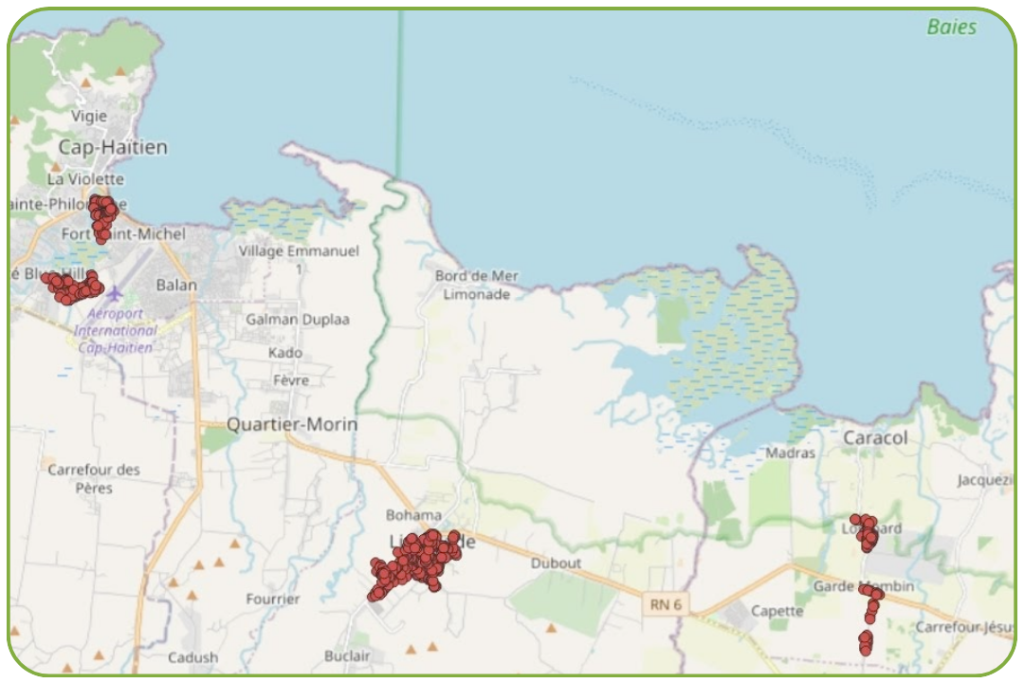
Figure 1: Areas of Cap Haïtien, Haiti, targeted in our survey of 603 households in Foujwol, Blouyiz,
Limonad, and Karakol zones to capture household
sanitation practices, wealth, vulnerability, and
willingness to pay. Red dots represent locations of
households surveyed.
WILLINGNESS TO PAY
Stated willingness to pay data were collected using a double-bounded dichotomous choice method of contingent valuation. In the survey population, 60% stated they were willing to pay 350 HTG (the current price), 75% stated they were willing to pay 250 HTG, and 85% stated they were willing to pay 150 HTG per month for EkoLakay service. Wealth, satisfaction with current toilet, lack of privacy in current
toilet, and the initial price point households received in their questioning (anchoring) influenced WTP.
Past studies in low-resource settings have found that actual willingness to pay is often lower than stated willingness to pay. We therefore recommend subsidizing to 150-200 HTG to reach the most vulnerable households and promote 75-85% market penetration of EkoLakay toilets.
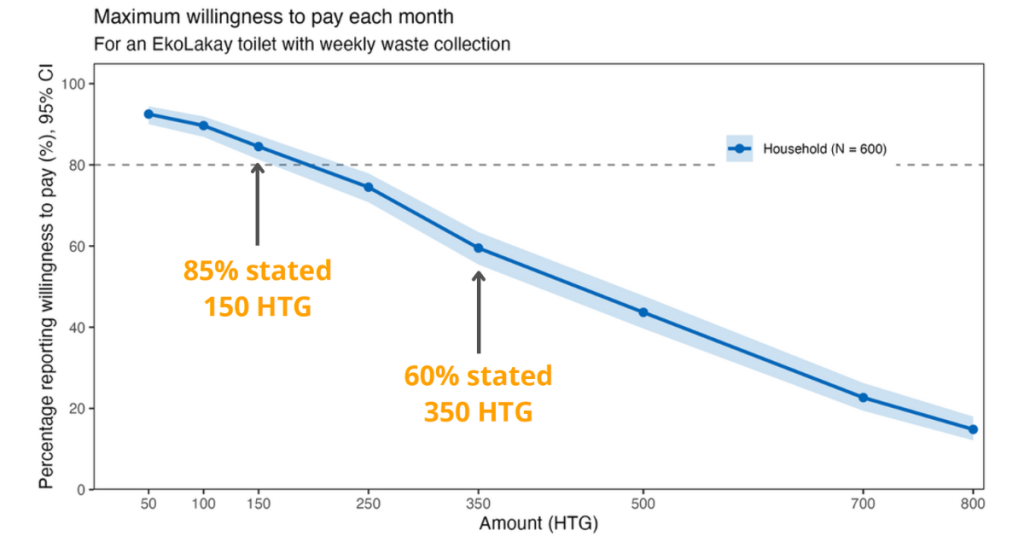
Figure 2: A demand curve showing the maximum willingness to pay each month for an EkoLakay toilet.
SUBSIDY TARGETING
We recommend combining the Equity Tool proxy-means test for wealth with additional locally-relevant vulnerability criteria to target subsidies to households who need them the most. Recommended vulnerability criteria based on stakeholder interviews include:
- lack of home ownership.
- undefined or many school-aged children in the household.
- children not attending school.
- lack of stable occupation.
- limited remittances.
- lack of durable fencing.
Several options exist for subsidy targeting, combining these two approaches. Some options are presented in the figures to the left in purple (households in the lowest wealth quintile or meeting 4+ vulnerability criteria) and blue dashes (households in the lowest 3 wealth quintiles who also meet 3+ vulnerability criteria).
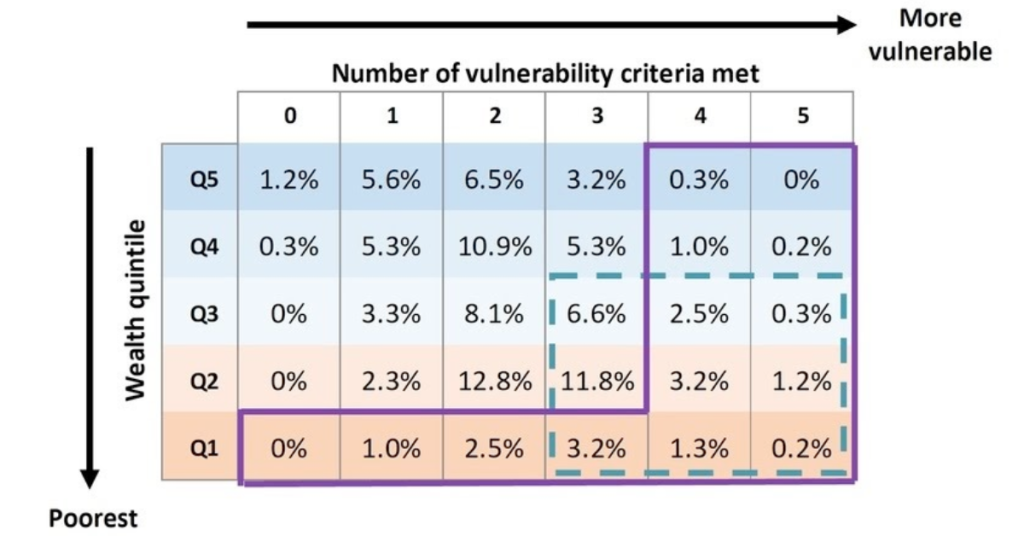
Figure 3: A subsidy targeting matrix showing options in purple (lowest wealth quintile or 4+ vulnerability criteria) and blue dashes (lowest 3 wealth quintiles and 3+ vulnerability criteria).
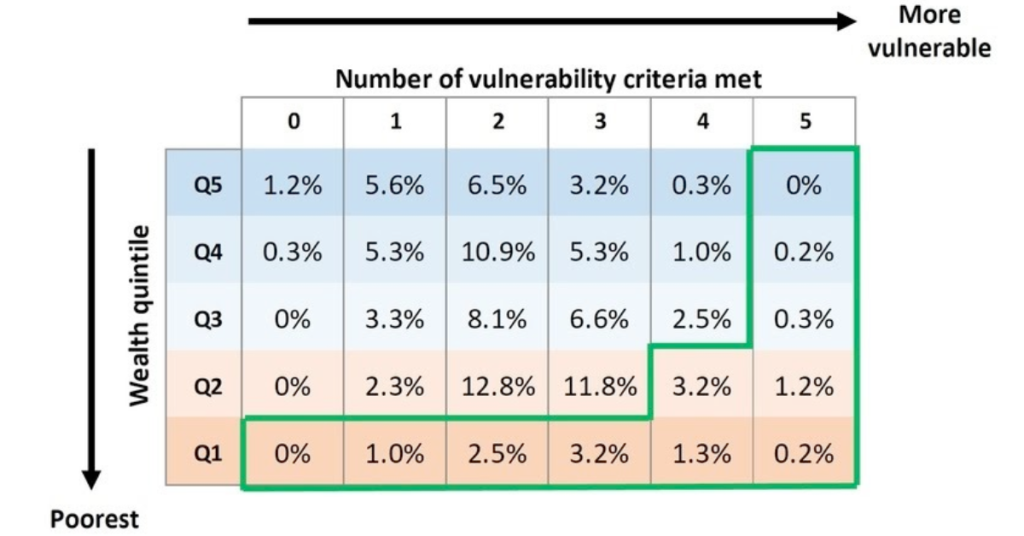
Figure 4: A subsidy targeting matrix showing wealth quintiles compared against the number of vulnerability criteria met and a stepped targeting option in green.
If targeting approximately 15% of households, we recommend the stepped approach shown in the second figure, which would capture 36% of households practicing open defecation.