May 2023
What is the water quality in Ethiopia?
With funding from the Conrad N. Hilton Foundation, partnering with Bahir Dar University in Ethiopia, Aquaya has been participating in a student fellowship program and collecting water quality monitoring data in selected districts in Ethiopia. In August – September 2022, we coordinated longitudinal water quality monitoring in three target woredas (districts) in Ethiopia: Farta Woreda, Dera Woreda, and North Mecha Woreda. Hilwa
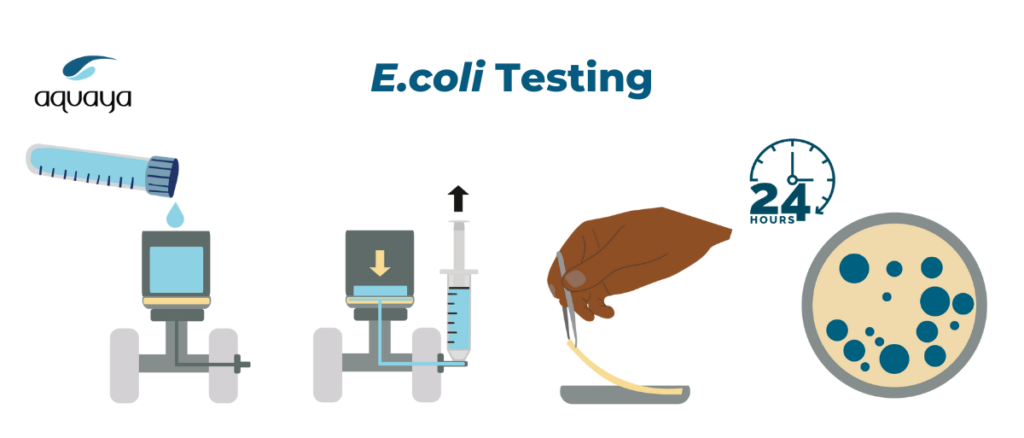
Water Testing
Farta Woreda
Farta Woreda is located in the south Gondar Administrative Zone of the Amhara National Regional State, Ethiopia. It is about 100km north of the Regional Capital- Bahir Dar, and 660 km north of Addis Ababa.
Water Points
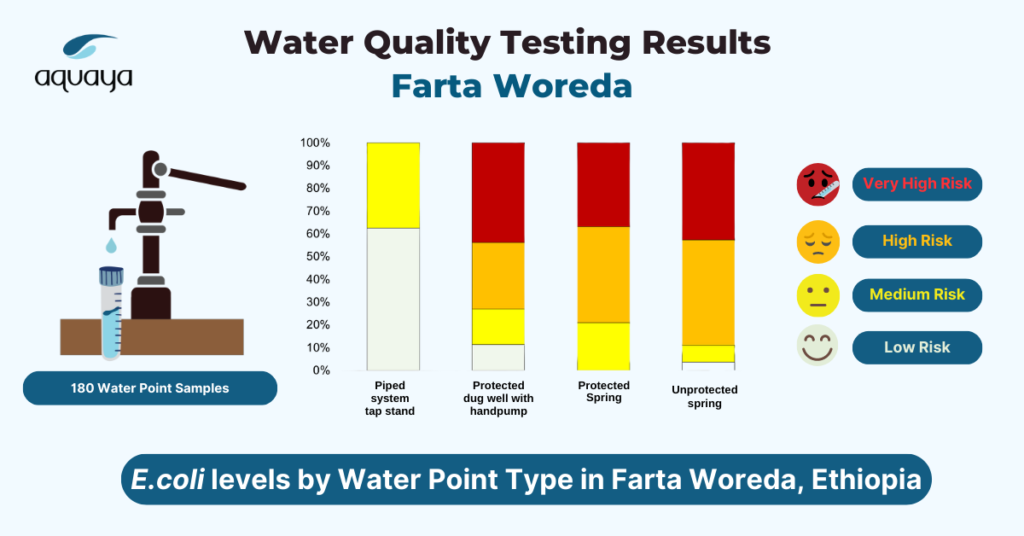
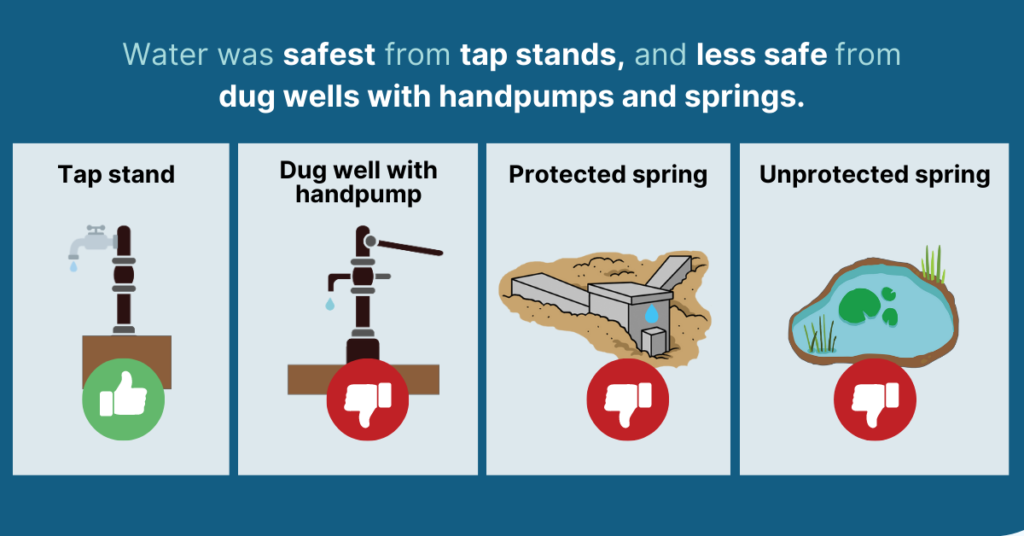
We conducted surveys and tested E. coli at 180 water points, including improved and unimproved types. Only 10% of water points were free from E. coli contamination. Water was microbially safest from piped system tap stands (63% free from E. coli) and less safe from dug wells with handpumps, springs, and surface water (8% free from E. coli). Watertracs
Household Samples
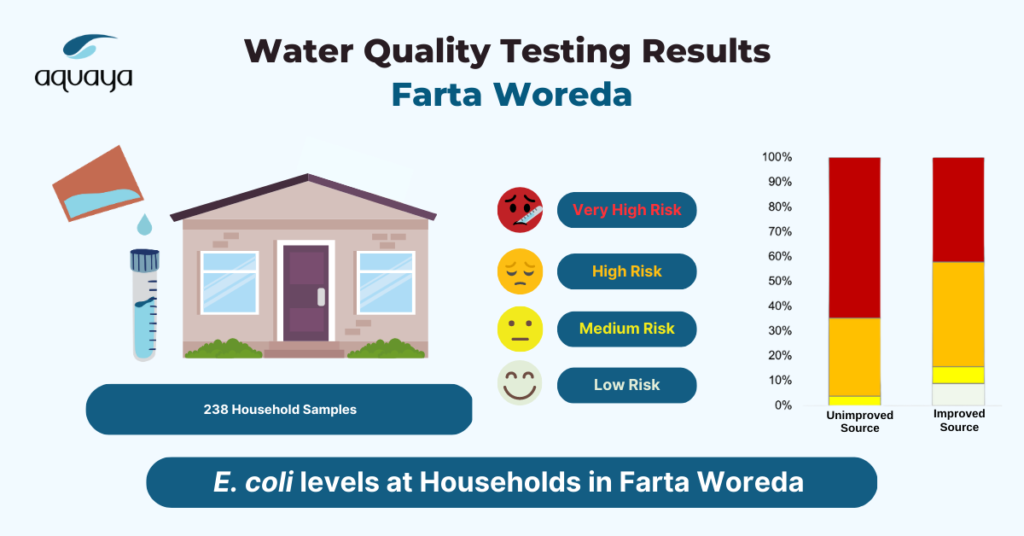
We detected E. coli in 96% of stored household water samples, and over half were in the very high-risk category. Household samples from an improved source like a tap stand had safer water (9% free from E. coli) than those collected from unimproved sources (0% free from E. coli); however, most households had water from an unimproved source.
Dera Woreda
Dera is one of the woredas in the Amhara Region of Ethiopia. Part of the Debub Gondar Zone, Dera is bordered on the south by the Abbay River, which separates it from the Mirab Gojjam Zone, on the west by Lake Tana, on the north by Fogera, on the northeast by Misraq Este, and on the east by Mirab Este.
Water Points
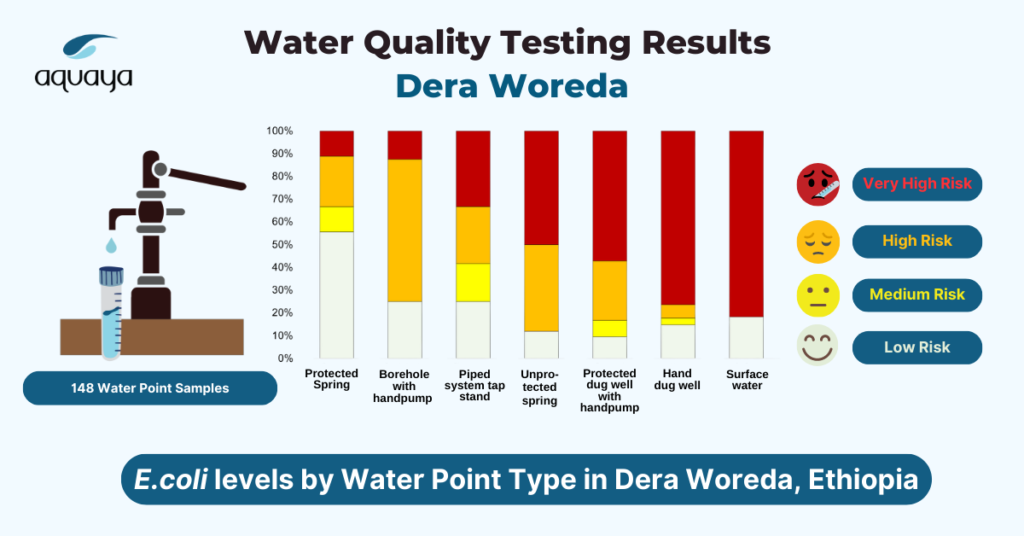
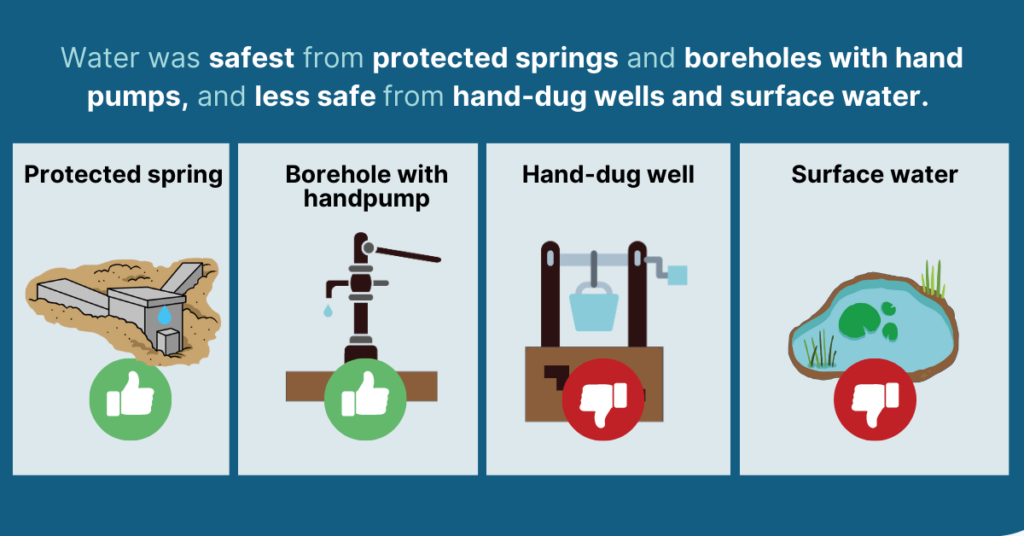
We conducted surveys and tested E. coli at 158 water points, including improved and unimproved types. Only 16% of water points were free from E. coli contamination. Water was microbially safest from protected springs and boreholes with hand pumps (41% free from E. coli) and least safe from dug wells and surface water (16% free from E. coli).
Household Samples
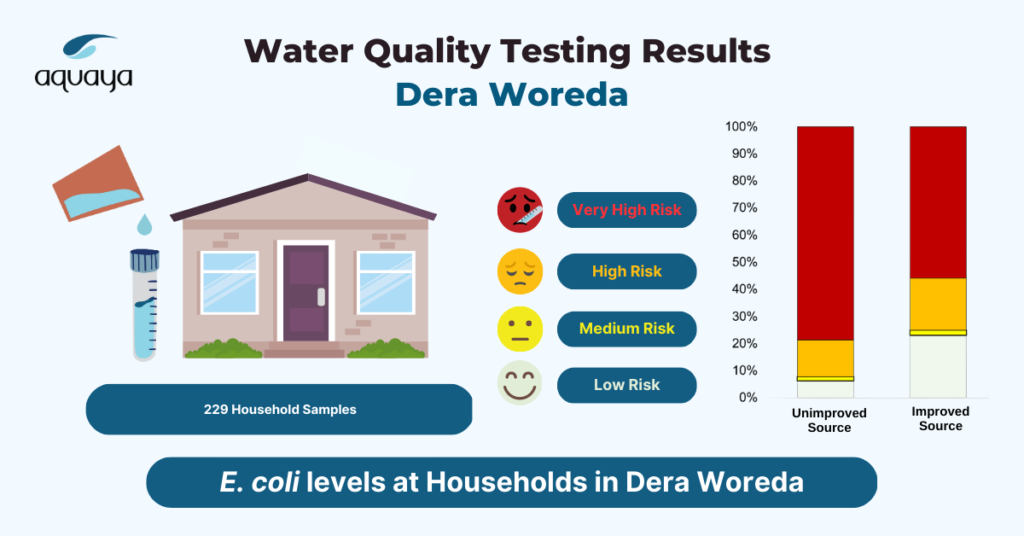
We detected E. coli in 90% of stored household water samples, and nearly three-quarters were in the very high-risk category. Household samples from an improved source like a hand pump or protected spring had safer water (23% free from E. coli) than those collected from unimproved sources (6% free from E. coli); however, the majority of households had water from an unimproved source.
North Mecha Woreda
Mecha (formerly known as Merawi) is a woreda in Amhara Region, Ethiopia. The name, Mecha, is taken from the name for a subdivision of the province of Gojjam. Part of the Mirab Gojjam Zone, Mecha is bordered on the south by Sekela, on the southwest by the Agew Awi Zone, on the west by the Lesser Abay River which separates it from Debub Achefer and Semien Achefer, on the northeast by Bahir Dar Zuria, and on the east by Yilmana Densa.
Water Points
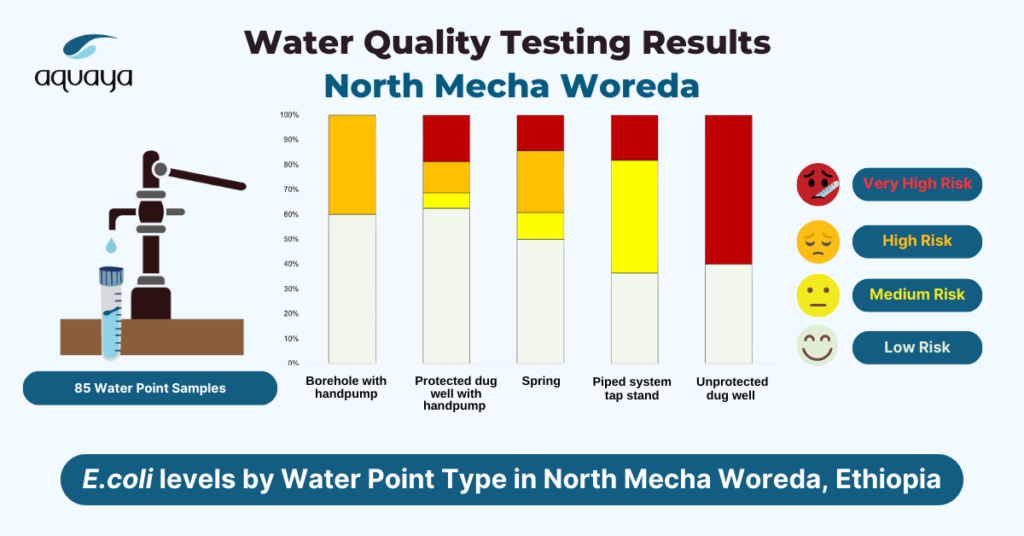
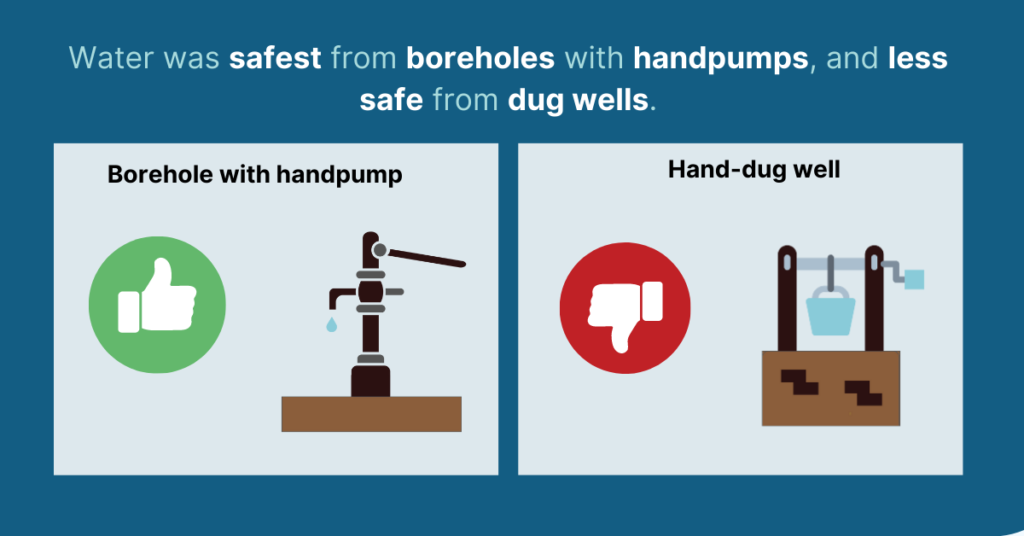
We conducted surveys and tested E. coli at 85 water points, including improved and unimproved types. About half of the water points (53%) were free from E. coli contamination. Water was microbially safest from boreholes and dug wells with hand pumps (62% free from E. coli) and least safe from unprotected dug wells and surface water (38% free from E. coli).
Household Samples
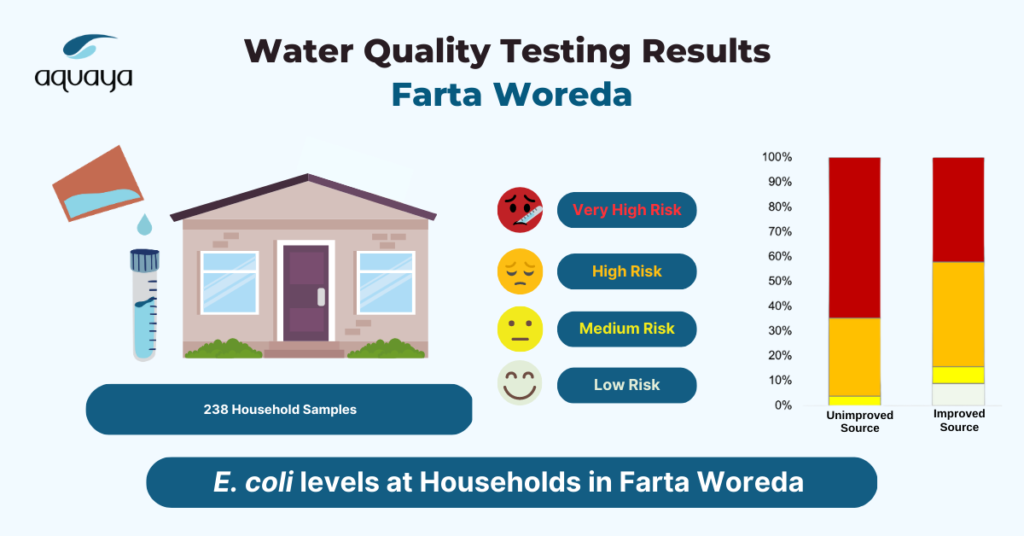
We detected E. coli in 52% of stored household water samples, and one-quarter were in the very high-risk category. Household samples from an improved source like a hand pump or protected spring had safer water (53% free from E. coli) than those collected from unimproved sources (44% free from E. coli); however, the majority of households had water from an unimproved source.
This work is supported by funding from the Conrad N. Hilton Foundation.