September 2023
How to Implement the Water Quality Assurance Fund Program
How did the Water Quality Assurance Fund originate?
The Water Quality Assurance Fund concept came from The Aquaya Institute’s efforts, as supported by the Conrad N. Hilton Foundation, to overcome barriers to monitoring drinking water safety in the rural district of Asutifi North in southern Ghana. The pilot in 2020–2022 led to scale-up efforts under the Rural Evidence and Learning for Water (REAL-Water) program (2021–2026) of USAID, with additional support from the Hilton Foundation and Helmsley Charitable Trust.
Where have Water Quality Assurance Funds been used?
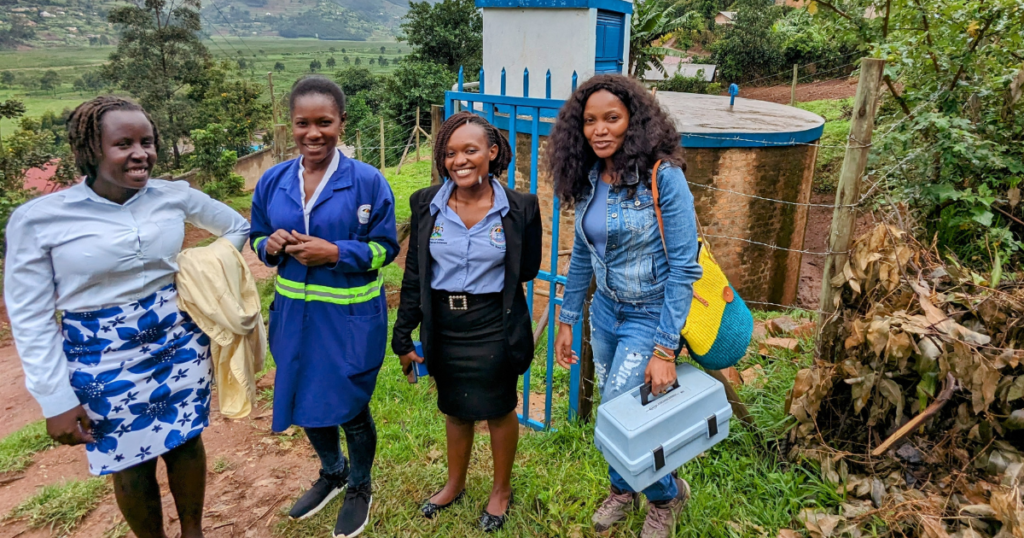
While continuing to apply the Assurance Fund in Asutifi North District, Ghana, since 2020, The Aquaya Institute and partners identified multiple water systems for expansion in 11 Ghanaian districts in the Ahafo and Bono regions (initiated March 2023). In addition, efforts are underway to replicate and test the Assurance Fund model in Kenya (initiated August 2023), Uganda, and Tanzania.
How long are the assurance funds expected to last?
The initial deposit is typically equivalent to four months of testing costs for all enrolled rural water systems. Rural water systems defaulted on approximately 11% of the laboratory invoices in the pilot, and about one-third of those were ultimately repaid. Considering potential subsidy add-ons and repayment compliance variability, the Assurance Fund will likely draw down slowly over time. A lifespan of 1.5–3 years without replenishment can be estimated for planning purposes.
What are the advantages?
- The Water Quality Assurance Fund program connects well-equipped, centrally located professional laboratories with dispersed rural water systems for whom onsite water quality monitoring is not feasible or cost-efficient.
- Formal agreements, auditing, and third-party oversight reinforce trust among the parties.
- Pooling several water systems opens a new potential revenue market for the central laboratory.
- The payment setup leverages donor support, relying primarily on locally sustainable financial arrangements.
- The Assurance Fund setup procedures screen for rural water systems that are most likely to benefit (e.g., within a reasonable day-trip distance from the central laboratory, able to pay for testing fairly consistently, able to address water quality issues if given technical guidance, and committed to sustainment).
What are the disadvantages?
- Donor or in-kind support is needed to cover implementation and ongoing facilitation costs (the main expense) and subsidies in some cases.
- The Assurance Fund account will likely draw down over time due to incomplete repayment and/or subsidy add-ons requiring replenishment.
- Water quality data does not always lead directly to management improvements, lacking supporting management systems, plans, and resources.
- Partnerships and contracts can take time and expertise to develop (approximately 6–12 months, depending on context). The basic approach likely requires adaptation to fit diverse country contexts.
Implementation Manual
This manual was prepared to document and disseminate the Water Quality Assurance Fund approach initially piloted in Ghana. Initial evidence supports scaling up the program to contribute to the safe management of small, rural water systems.
This brief is made possible by the support of the American people through the United States Agency for International Development (USAID). The contents of this brief are the sole responsibility of The Aquaya Institute and REAL-Water consortium members. They do not necessarily reflect the views of USAID or the United States Government.