September 2024
Lessons for Benchmarking Fecal Sludge Management Services
Water and wastewater utilities have long used benchmarking as a performance management tool to compare performance indicators to targets, historical values, or other organizations. The practice has since expanded to fecal sludge management. This research reviewed the literature on good practices for benchmarking water and wastewater management and conducted key informant interviews to understand emerging fecal sludge management benchmarking efforts across eight countries. It found that benchmarking can serve as a tool to improve transparency, foster competition, and inform decisions.
To make use of benchmarking, however, cities first need a functioning fecal sludge management system, organizational readiness, and clear communication channels. Launching a benchmarking program requires regulatory sensitization, a customer-aware business model, financial support, and adequate data management capacity. In addition, attention to the use of data for decision-making, incentives, and public information sharing can reinforce the beneficial outcomes of benchmarking. The findings recommended adopting a short list of high-priority key performance indicators (KPIs) for monitoring fecal sludge management services at the city level.
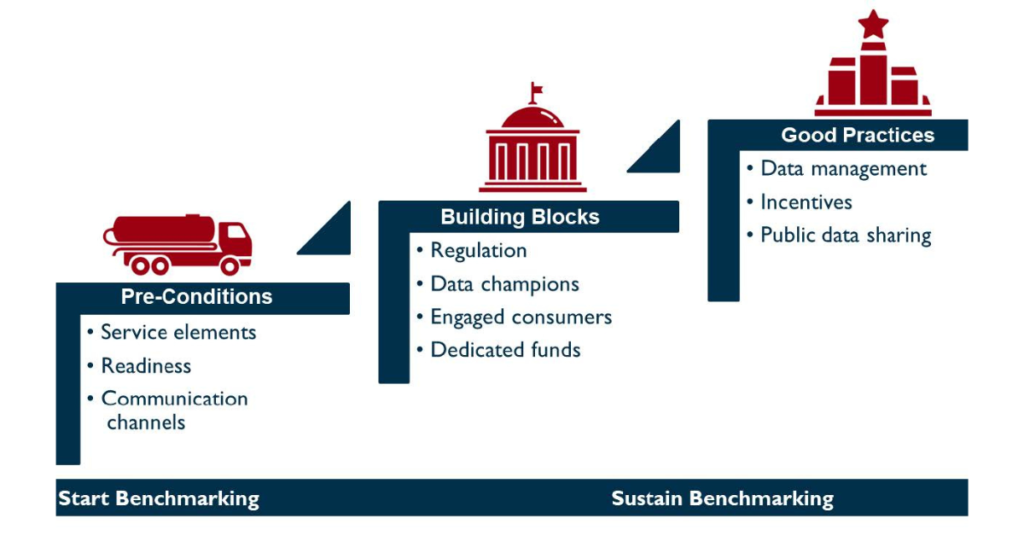
Enabling factors for sustainable benchmarking. The primary building blocks for starting new fecal sludge management benchmarking programs include regulatory ownership, customer demand, data champions, and financial support. These stem from the case studies, but any building block might serve as an initial entry point to facilitate the introduction of fecal sludge management benchmarking programming in other locations.
Findings
- Benchmarking for fecal sludge management is more complex than for piped water and wastewater. The number and diversity of actors across the fecal sludge management service chain pose challenges to coordinated and efficient data collection and analysis.
- Successful use of benchmarking hinges on enabling factors. Regulatory buy-in, a full range of fecal sludge management services, organizational readiness, and dedicated funding are needed to set the stage for performance improvement initiatives.
- Fecal sludge management benchmarking can drive performance improvements, but has costs. Practitioners reported a wide range of outcomes, such as benefits such as greater internal visibility and eligibility for funding, as well as negative outcomes like risks of complacency or the potential for false reporting.
This learning brief, developed by USAID URBAN WASH, presents key findings and recommendations from this research.