January 2024
How can we improve water quality among small, local water providers in Nairobi, Kenya?
Urban, low-income households tend to receive water services from small, local water providers instead of regulated water utilities. Understanding how to improve water safety among small, local providers who serve low-income populations can help promote more equitable access to clean water. USAID URBAN WASH is partnering with Nairobi Water and Nairobi City County to understand how best to improve water quality among small, local providers in Nairobi, Kenya.
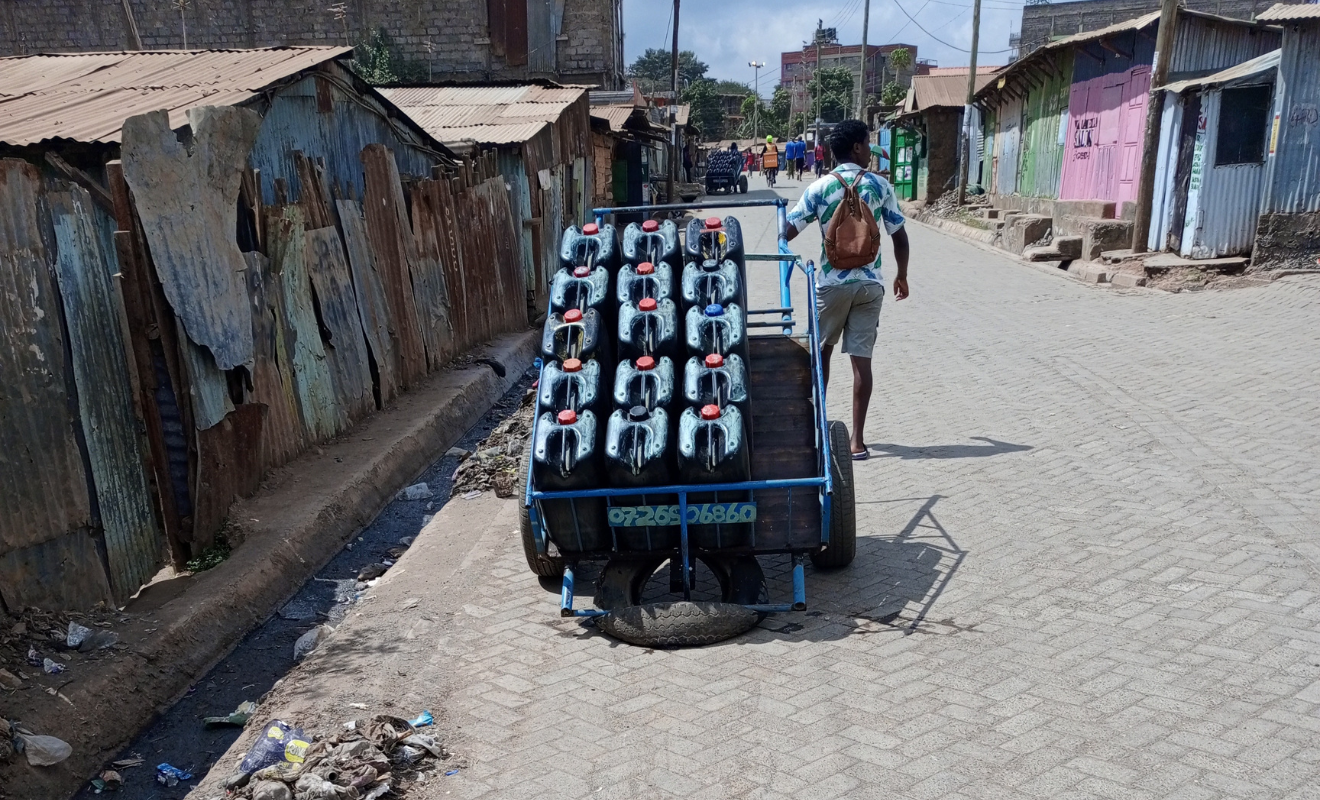
A hand-drawn cart water vendor in Kabiro, Kawangware, Nairobi, Kenya.
Background
In Kenya, the Water Services Regulatory Board has mandated that utilities oversee water vendors within their jurisdiction. Nairobi City Water and Sewerage Company is undertaking a licensing process for water vendors and developing a new Water Safety Plan for the whole city that will incorporate oversight of small, local vendors. In parallel, Nairobi City County’s Public Health Office has been conducting water quality testing and small, local providers capacity-building at the community level. Despite these complementary initiatives, Nairobi Water and the County Public Health Office have not actively streamlined their activities to improve water quality.
Research Questions
This research plan summarizes the existing evidence on this topic and outlines the approach to address the following questions:
- What are successful approaches (e.g., institutional arrangements, incentives, enforcement, monitoring) to promote water safety among small-scale suppliers (including formal and informal entities) who typically serve the poorest households in cities?
- How can the utility and the county, in collaboration with other government actors, incentivize small, local providers to improve water safety?
- How can the utility and the county leverage existing initiatives and strengthen linkages to effectively monitor small, local vendors?