March 2026
How to Design Water and Sanitation Subsidies that Reach the Poorest Households
Water and sanitation subsidies can be powerful tools for reaching the poorest households, but they often miss the mark. A 2019 World Bank report showed that 56% of subsidies go to the wealthiest 20%, while only 6% reach the poorest 20% of the population.
Over the past seven years, Aquaya has partnered with water and sanitation implementers to generate evidence on how subsidies can be better designed, targeted, and delivered. This blog brings together our key findings.
What are water and sanitation subsidies?
Subsidies occur when a user pays less for a service than the provider’s cost, leaving a third party, such as a government, donor, or other users, responsible for the difference.
- One-time subsidies reduce the upfront cost of accessing a service, for example, a reduced connection fee for piped water or a discounted toilet or pit latrine construction.
- Recurring subsidies lower ongoing costs, such as reduced water consumption tariffs or discounted fecal sludge emptying fees.
Why target subsidies?
Poor and vulnerable populations are often unable to pay for water and sanitation services, particularly high upfront costs like piped connection fees and toilet construction. Yet when subsidies are applied broadly without targeting, they disproportionately benefit wealthier households.
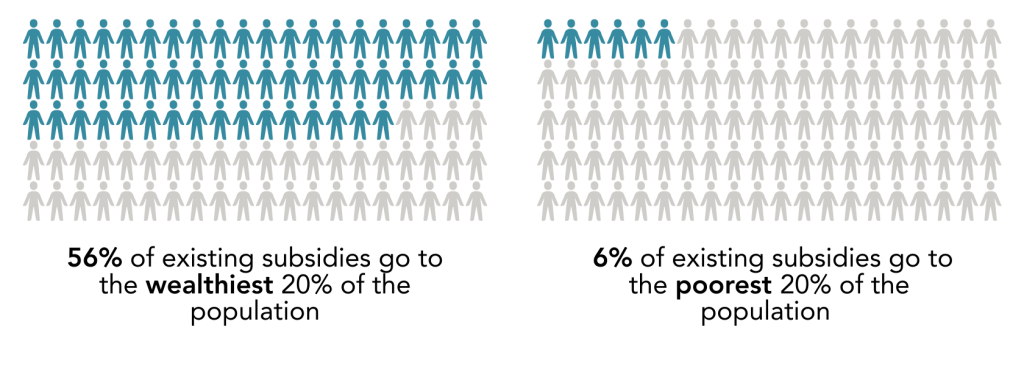
Additionally, the majority of existing subsidies are applied to water, urban, and piped services. Balancing subsidies (e.g., between water and sanitation, and between piped and non-piped services) and targeting subsidies to poor households offer the most efficient use of funding for a sector with limited resources.
Which subsidy targeting methods are most appropriate for identifying the poor?
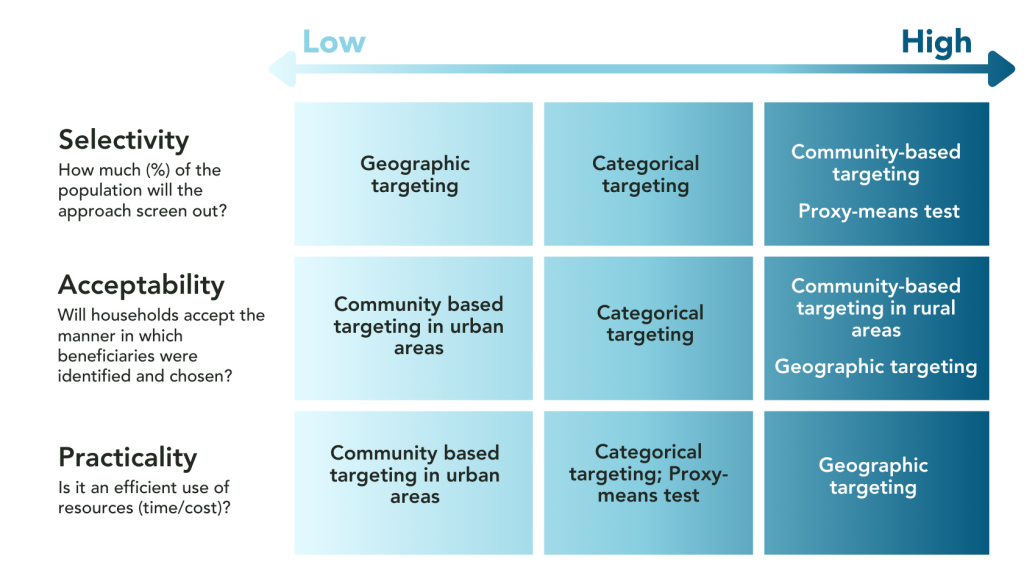
There is no “silver bullet” targeting method. Every approach involves trade-offs between accuracy, acceptability, and practicality.
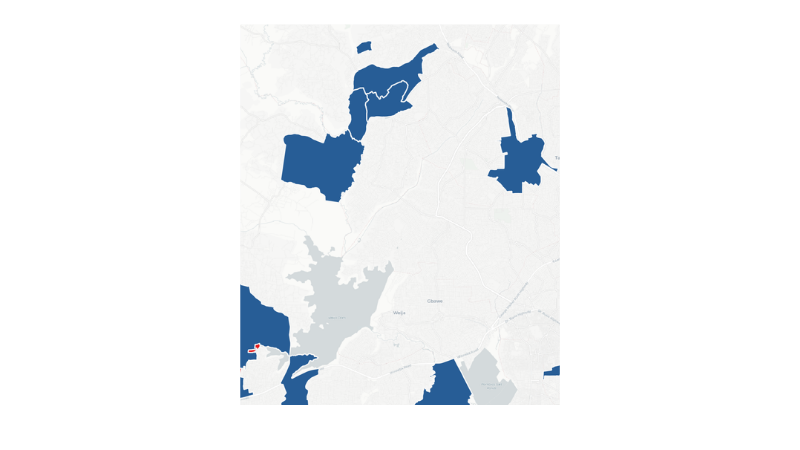
Geographic targeting directs subsidies to entire low-income areas.
Our data from Ghana show that even communities with low water and sanitation access can be diverse in wealth, meaning a significant share of geographically targeted subsidies may reach households that are not poor.
Community-based targeting (CBT) relies on community leaders or members to identify the poorest households.
In our studies in rural Ghana, local officials considered it the most transparent method, though it was less accepted in urban areas where social ties are weaker.

Categorical targeting identifies poor households based on characteristics that can be determined via survey questions or existing census data.
In Ghana, for example, households headed by elderly or disabled individuals were often considered poor or vulnerable.
Subsidizing standpipe water or pit-emptying can also be considered a type of categorical targeting, as it targets users of a particular type of service.
Proxy means testing (PMT) uses questionnaires about household assets to estimate poverty levels. Multiple options exist, such as the Demographic and Health Survey wealth index, the Equity Tool, and the Poverty Probability Index.
Our team developed a machine learning-based PMT for Ghana that outperformed existing tools like the Poverty Probability Index. Community members perceived PMTs as fairer, but administering a PMT typically requires door-to-door visits and can be costlier than other methods.
Importantly, different methods often identify different subsets of the population as “poor.” In many cases, Proxy Means Testing and Community-Based Targeting have limited overlap, suggesting that combining approaches, for instance, geographic targeting to identify priority areas paired with household-level screening, may improve overall performance.
A variety of factors can determine an implementor’s final targeting approach.
Barriers beyond targeting
Subsidy programs have expanded access to water and sanitation services for poor households, but some fundamental obstacles continue to exclude them.
Distance: Many poor households live far from services or piped networks. In Accra, for example, approximately 85% of the poor population lives outside the connecting distance of water mains.
Tenancy: Many poor households, particularly in small towns and urban areas, are renters. They may need a landlord’s permission to install a service or may be required to invest in an asset they cannot take with them.
Implementation matters as much as design
Community engagement around subsidy implementation is just as important as subsidy design (funding and pricing, targeting approach, payment modalities). Distrust in service providers and lack of knowledge about subsidy programs can reduce the reliability of screening methods and ultimately, uptake in subsidies among the poor. Short implementation timeframes and inadequate staffing further exacerbate these challenges.
Alignment across stakeholders is also critical. Donors, government officials, and service providers need to resolve competing priorities and resources, not just the subsidy itself, but the process of rolling it out. Within service-providing organizations, disconnects between departments (e.g., sales, billing, pro-poor units) can impede delivery. Internal training and consistent messaging are essential for buy-in.
Looking forward
Seven years of research have deepened our understanding of what it takes to deliver water and sanitation subsidies effectively. The evidence points to several key takeaways:
- No single targeting method is perfect. Combining approaches, such as geographic targeting to identify priority areas paired with household-level screening, can improve accuracy and acceptability.
- Technology can help, but it isn’t a substitute for engagement. Tools like our smartphone-based poverty screening app can make targeting more practical, but they must be embedded in strong community engagement processes.
- Subsidies address one barrier among many. Distance, tenancy, infrastructure conditions, and household awareness all shape whether a subsidy translates into improved access to water and sanitation.
- Implementation quality is essential. Adequate time, staffing, stakeholder alignment, and community trust are as important as the subsidy design itself.