December 2024
How is Rural Water Regulated in Peru?
This report examines the rural water sector’s regulatory challenges, developments, and research opportunities. Conducted by USAID’s REAL-Water program, this study focuses on adapting regulatory frameworks for Rural Water Services in Peru, particularly for community-based organizations (CBOs) and municipal providers.
SUNASS (the national water regulator) adopted a proactive approach, emphasizing technical assistance over punitive measures, and implemented differentiated frameworks for rural areas. However, challenges remain in applying urban regulatory models to diverse rural contexts.
Proposed Research Areas:
- Financial incentives for municipalities and their effect on service outcomes.
- The impact of regulatory activities on provider performance.
- Evaluation of tariff systems like cuota familiar on revenue collection.
- Strengthening technical municipal areas (ATMs) for improved service delivery.
The report underscores the importance of tailored regulation, robust data systems, and capacity building to improve rural water services. Further research is needed to evaluate existing policies and support long-term sustainability in Peru’s rural water sector.
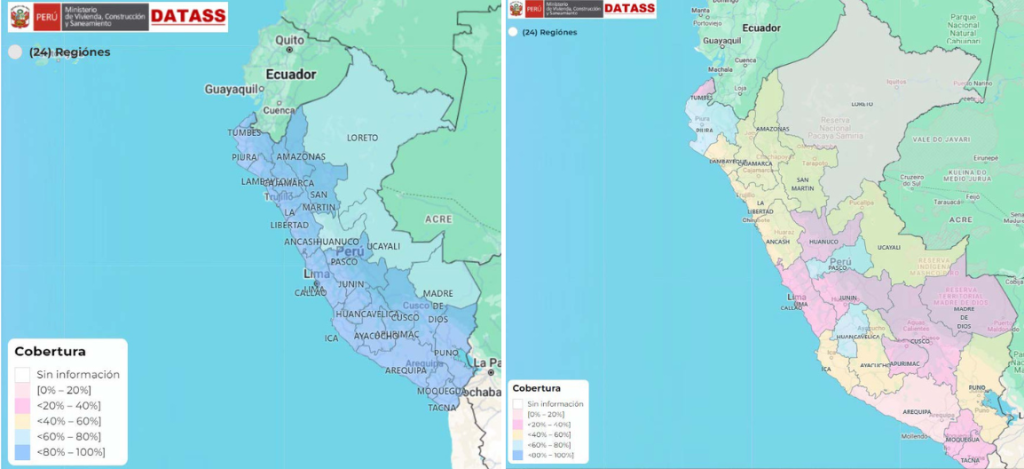
Regional differences in rural water supply coverage; b) Regional differences in chlorine presence in drinking water
DISCLAIMER: This report is made possible by the support of the American people through the United States Agency for International Development (USAID). The contents of this brief are the sole responsibility of The Aquaya Institute and REAL-Water consortium members. They do not necessarily reflect the views of USAID or the United States Government.