December 2025
From Tsunami Response to 20 Years of Impact: The Aquaya Story
As The Aquaya Institute celebrates its 20th anniversary, we sat down with co-founder Ranjiv Khush, who transitioned out of the organization in 2025 after nearly two decades of leadership. Ranjiv reflects on the journey from a San Francisco garage to a globally recognized research institute.
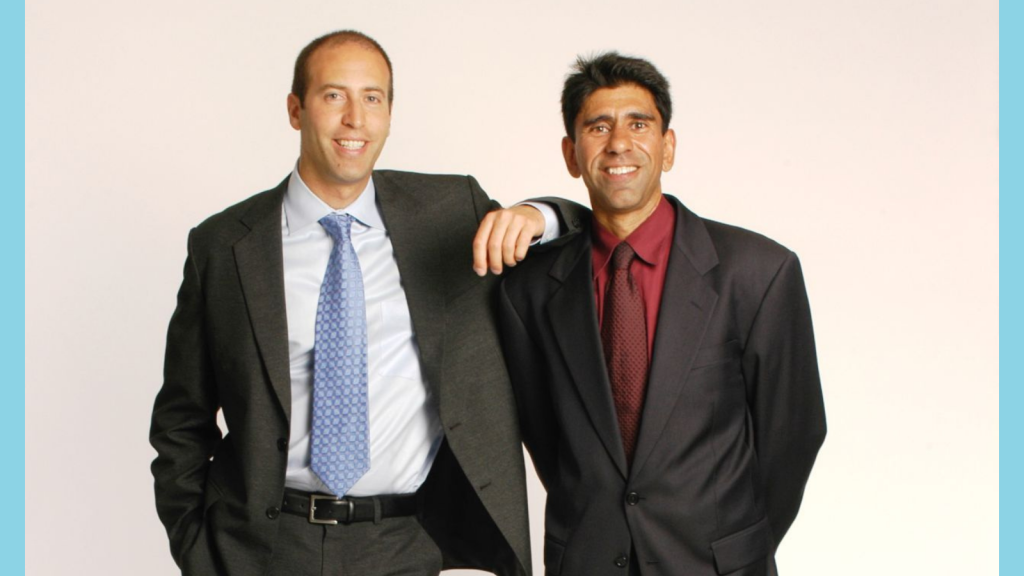
When Ranjiv Khush and Jeff Albert started The Aquaya Institute in 2005, they had a room in a San Francisco garage and an idea that seemed almost radical:
What if international development could work like a Silicon Valley startup, but as a nonprofit?
Twenty years later, as Aquaya marks its anniversary amid one of the sector’s most turbulent periods, that question feels more relevant than ever.
A Tsunami Response
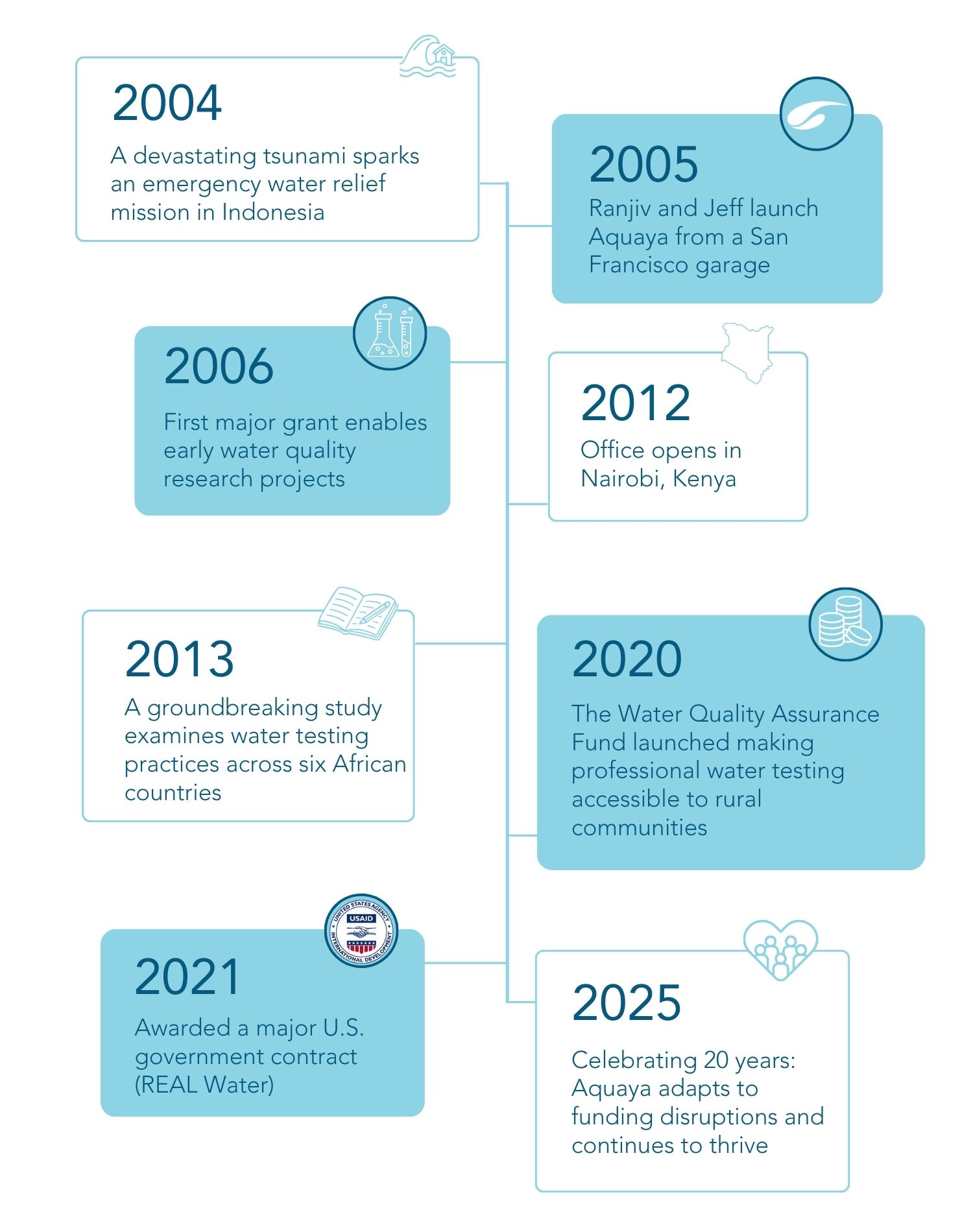
Ranjiv and Jeff met in Washington, D.C., through the American Association for the Advancement of Science (AAAS) fellowship program. They were both following typical career paths for ambitious scientists when everything changed on December 26, 2004.
The Indian Ocean earthquake and tsunami resulted in the deaths of more than 200,000 people across Southeast Asia. Water was a critical priority: contaminated sources threatened a second wave of death through disease.
Ranjiv and Jeff had recently attended a presentation by Greg Allgood, a Procter & Gamble researcher and business development specialist who was evaluating markets for a simple household water treatment product. When the tsunami hit, Jeff mobilized quickly—raising funds, securing treatment packets, and deploying to Indonesia to work alongside local relief agencies responding to the crisis.
“Jeff just did it all by himself,” Ranjiv recalls. “There was no Aquaya, there was no organization.”
But there was a model. Ranjiv had recently encountered Victoria Hale, who founded the world’s first nonprofit pharmaceutical company, The Institute for One World Health, to develop drugs for diseases afflicting the poor, treatments with no profit incentive for traditional drug companies.
“That was the first startup I had heard of directed at international development,” Ranjiv says. “Before that, all the organizations doing this work that I knew of were big and well established.”
2005: From Garage to Global
By April 2005, Aquaya was official. The name came from Jeff’s brain, a play on “aqua” that somehow stuck. The team set up shop in a San Francisco garage, embodying the Silicon Valley startup cliche.
Their timing was perfect. Research was showing that simple household water treatment could dramatically reduce diarrheal disease, but few were bridging the gap between academic findings and on-the-ground implementation. Aquaya carved out a unique position: small enough to be agile, research-driven enough to be credible, and implementation-focused enough to be useful.
Greg Allgood, impressed by Jeff’s tsunami relief effort, arranged for a grant through Johns Hopkins University. “Without Greg, I think we would have spun our wheels for a long time,” Ranjiv admits.
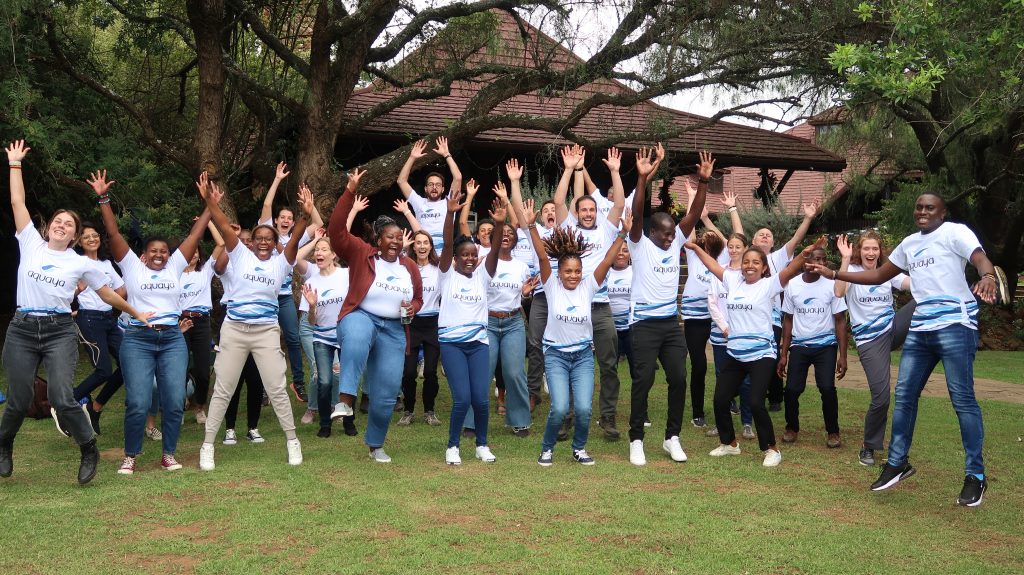
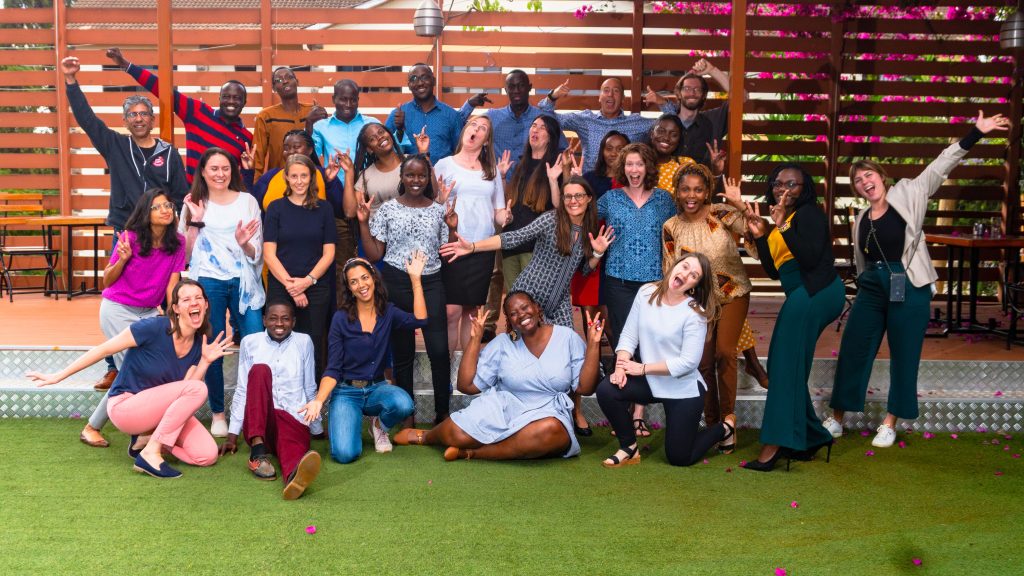
The organization grew steadily: from a garage to a San Francisco office, and eventually, to Nairobi, Kenya, where Aquaya’s team expanded as work developed across Africa. Today, Aquaya has staff in Kenya, Ghana, Uganda, Ethiopia, France, and the United States.
Research That Answers Real Questions
What sets Aquaya apart? Its focus on demand-driven research. In the mid-2000s, the development world was awash in good intentions and limited evidence. The randomized control trial revolution was transforming development economics, but was just reaching the water and sanitation sector.
“In order to create impact through science and research, you have to be answering the questions that are most important to decision makers,” Ranjiv explains. “I can love a question. I can think it’s the best question in the world. But if the people actually making the decisions don’t think it’s interesting, that research won’t have the impact I’d like.”
This philosophy —demand-driven research with academic-quality methods — has become Aquaya’s signature. For example, Aquaya didn’t only study water filters in lab conditions; they studied whether they actually worked in people’s homes, used by real families, over months and years.
One early program put this into practice at an unprecedented scale: conducting an experiment to understand what drives monitoring performance among 26 regulated water suppliers and surveillance agencies across six African countries. “Only Aquaya could have done that,” Ranjiv says.
The work laid the foundation for what would become one of Aquaya’s most substantial innovations.
The Water Quality Assurance Fund
Aquaya’s research demonstrated that it was often difficult for small water utilities to justify the costs for maintaining equipment and staff for water quality testing. Large urban labs had no reason to help remote communities that couldn’t pay for the service.
The Water Quality Assurance Fund solved these issues. This fund guarantees laboratories’ payment for testing rural water systems, even if those systems can’t pay immediately. This removes the financial risk that kept labs from serving remote areas while giving rural communities access to professional testing. The program also trains water operators and provides technical assistance to address contamination issues.
After pilots and randomized controlled trials in Ghana and Kenya, it’s showing real promise.
“That’s the most creative thing that’s happened with respect to improving water quality testing in low-resource settings,” Ranjiv says. “It has the potential to really improve how water testing is done globally.”
The Talent Magnet
Ask Ranjiv what he’s most proud of over 20 years, and he doesn’t mention grants or publications first. He talks about people.
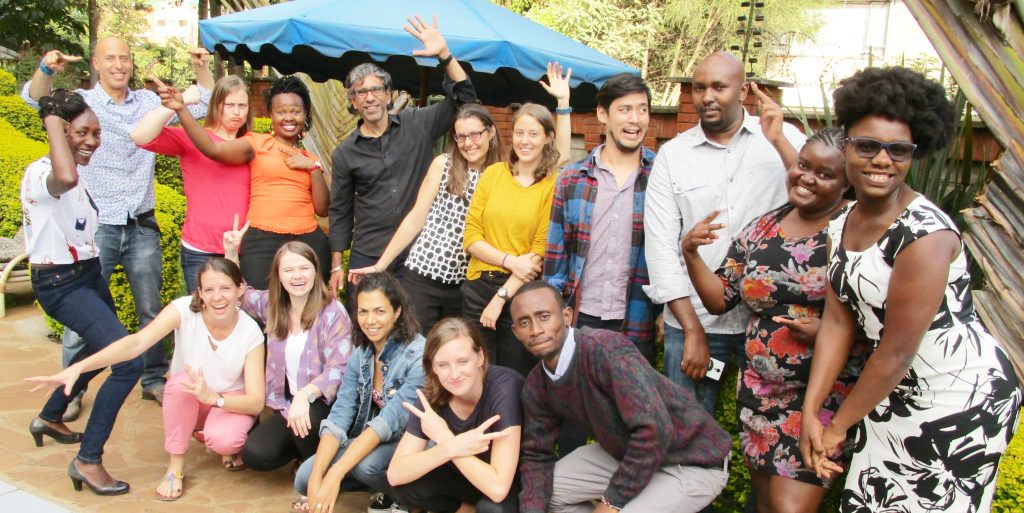
“I think what I’m probably most proud of is helping to create an organization where super talented people who have a lot of choices want to be part of it,” he says.
Top PhD graduates from UC Berkeley, the London School of Hygiene and Tropical Medicine, and other leading programs chose Aquaya over university positions, large NGOs, or lucrative private sector jobs. Their academic advisors had to believe in the organization enough to recommend it.
“That’s like sending your kids somewhere [for academic advisors],” Ranjiv reflects. “You’ve invested an incredible amount of time; you’re invested in their success.”
The culture that attracted this talent is distinctive: more “research lab” than traditional NGO, and intellectually rigorous, collaborative, and willing to admit uncertainty.
2025: What 20 Years Means
By the early 2010s, Aquaya had built credibility with foundation funders. Hence, Aquaya then started partnering with USAID and won the major award, REAL Water, in 2021. When USAID’s programs were terminated in February 2025, many organizations dissolved. Aquaya didn’t just survive; it adapted—leaner, tougher, and still moving forward.
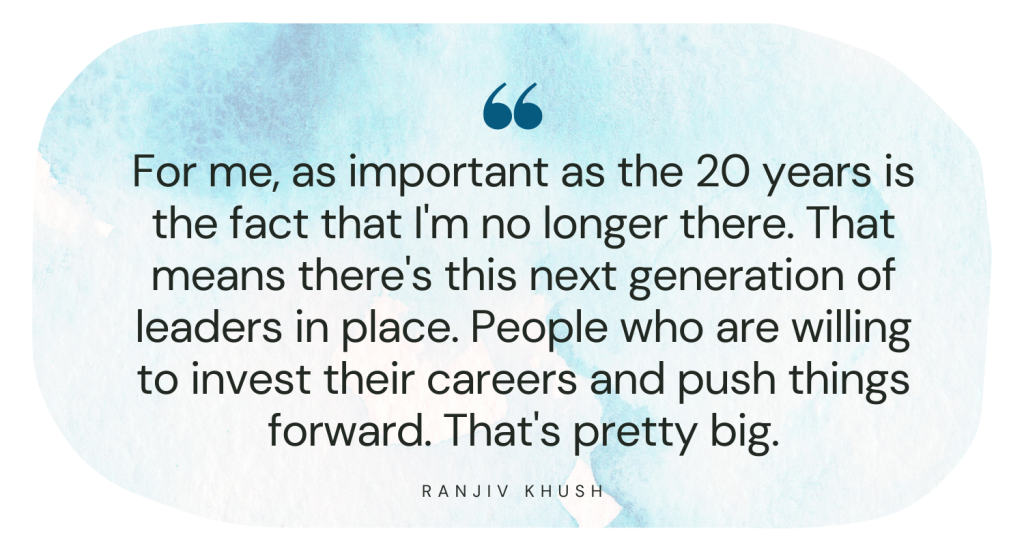
As Aquaya marks this milestone, Ranjiv reflects on what matters most.
In its first 20 years, Aquaya has published over 50 peer-reviewed papers, worked in more than 30 countries, conducted thousands of water quality tests, and trained thousands of water professionals. But perhaps more notably, it has demonstrated a model: you can be small and nimble while also being scientifically rigorous. You can answer practical questions with academic-quality methods. You can build something that adapts and endures.
In a sector facing unprecedented uncertainty, that might be the most radical achievement of all: not just starting something, but building something that survives its founders, adapts to new realities, and continues to make itself useful.
Twenty years ago, two researchers in a San Francisco garage bet they could do development work differently. The work isn’t finished. But they were right.