March 2023
Financial Innovations for Rural Water Supply in Low-resource Settings
CHALLENGES OF RURAL WATER SUPPLY
Globally, the Sustainable Development Goals (2015–2030) drive efforts to increase water service levels while ensuring that services are affordable and no vulnerable population is left behind. In concert with global development goals, the United States Agency for International Development (USAID) Rural Evidence and Learning for Water (REAL-Water; 2021–2026) program focuses on identifying ways to expand water access and safety in rural areas of low- and middle-income countries. Rural areas pose special challenges for water supply, as homes may be too few or too dispersed to justify the cost of installing underground pipes from a high-quality water supply source or a centralized drinking water treatment facility. As of 2020, most people lacking even basic water services (i.e., water from a protected source requiring no more than 30 minutes to collect) lived in rural areas.
REPORT OBJECTIVES
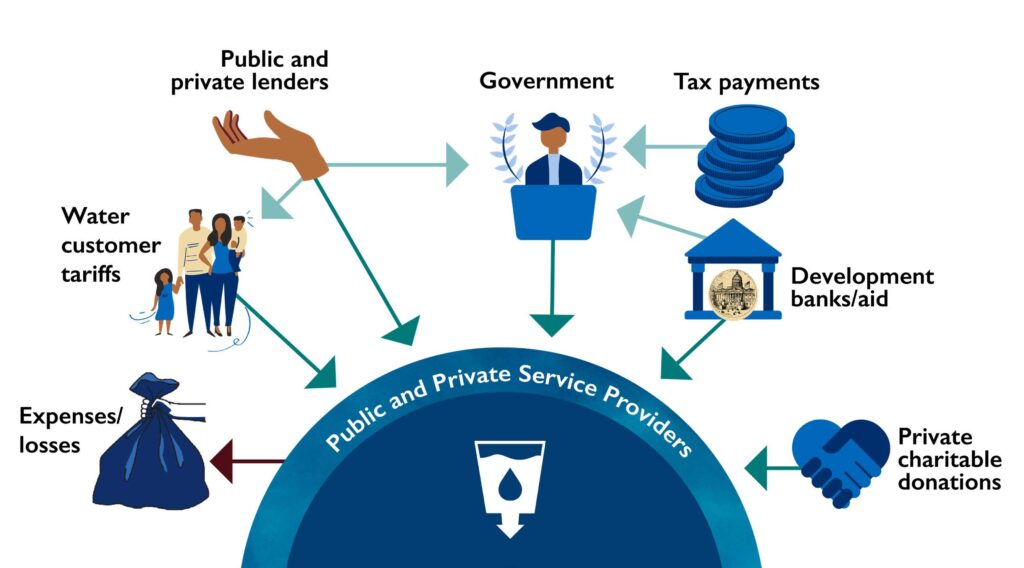
This report aims to provide an overview of financing or funding mechanisms or applications related to innovative water services in rural areas such as small villages and dispersed settlements. It highlights categories of novel financial concepts that might offer a greater range of options to government agencies, donors, practitioners, and communities who develop and manage rural water supplies.
OVERVIEW
The report covers seven modules with information on financial innovations for safe rural water supplies. Each financial innovation section discusses the background (the need for the specific innovation), the solutions (technical offerings), and examples in practice. “Pros” summarize the innovation’s advantages relative to other options (the status quo), while “cons” summarize the relative disadvantages. All innovation categories described herein promise to advance rural water supply efforts in low-resource settings.
Financial Innovations for Rural Water:
1. Village Savings for Water
2. Digital Financial Services
3. Water Quality Assurance Funds
4. Performance-Based Funding
5. Development Impact Bonds
6. Standardized Life-Cycle Costings
7. Blended Public/Private Finance
DISCLAIMER: This report is made possible by the support of the American people through the United States Agency for International Development (USAID). The contents of this report are the sole responsibility of The Aquaya Institute and REAL-Water consortium members. They do not necessarily reflect the views of USAID or the United States Government.