October 2023
Are Water Safety Plans Practical In Rural Ghana??
Much of the global population is exposed to contaminated drinking water. In piped systems, contamination can be mitigated at the water supplier or household levels. Still, it is often easier to mitigate at the water supplier level, where it can be centrally managed. A water safety plan is a holistic tool for proactively ensuring the safety of drinking water supplies from source to tap. Water safety plans are at the early stages of implementation in Ghana, and an evaluation of their implementation approaches and impact would help guide nationwide adoption and provide evidence useful to water service providers.
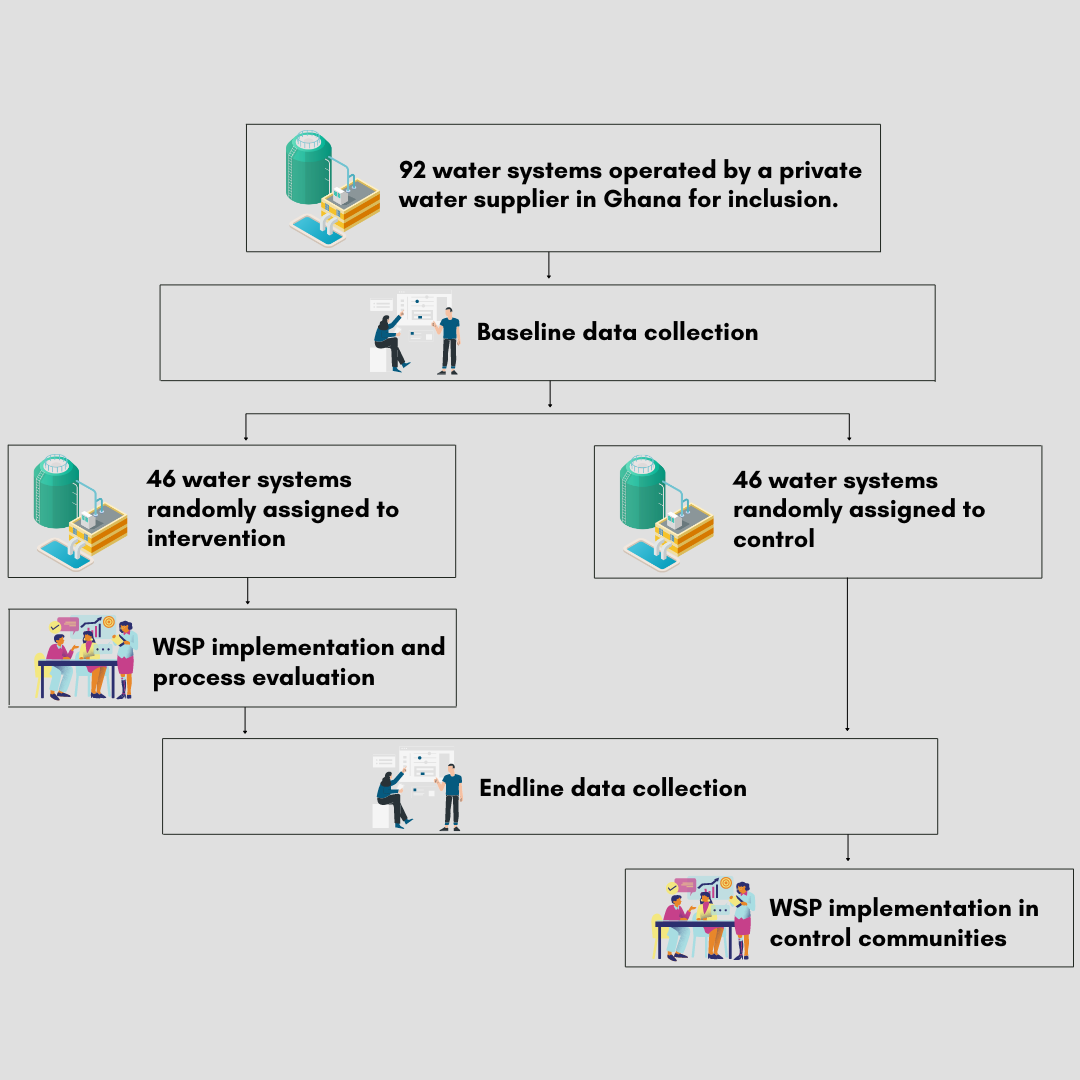
This study from USAID’s Rural Evidence and Learning for Water (REAL-Water) includes 92 piped water supply systems operated by a non-profit private water supplier in Ghana. The water systems are located across nine regions in southern Ghana, primarily in rural towns ranging in size from approximately 1,000 to over 10,000 people.
REAL-Water designed a randomized controlled trial to test the water safety plan’s implementation effectiveness and outcomes. This report presents the results of baseline data collection to understand the existing conditions of the water systems and communities before implementing water safety plans. It discusses preliminary implications for water safety planning in rural, low-income settings.
Summary of Baseline Findings
- Water system functionality was generally sufficient to meet consumer needs, but reliability could be improved.
- Microbial water quality was typically good at the point of collection but deteriorated before use.
- Many respondents complained about water quality and did not use the piped water source for drinking. Key finding 4: Water system infrastructure and management practices revealed opportunities for improved risk management.
DISCLAIMER: This brief is made possible by the support of the American people through the United States Agency for International Development (USAID). The contents of this brief are the sole responsibility of The Aquaya Institute and REAL-Water consortium members. They do not necessarily reflect the views of USAID or the United States Government.