April 2024
Are Water Quality Assurance Funds Effective in Improving Access to Safe Drinking Water in Kenya?
According to the 2022 WHO/UNICEF Joint Monitoring Programme (JMP) report, 80% of rural Africans lack safely managed drinking water. The Water Quality Assurance Fund in Kenya bridges the gap by financially supporting urban labs to test rural water, ensuring reliable services for remote communities, and promoting public health equity.
This report, produced by REAL-Water, summarizes baseline data collected in Kenya before the launch of a two-year impact evaluation of the Assurance Fund implementation model. This evaluation consists of a randomized stepped-wedge trial, which allows for measuring impacts rigorously while rolling out the intervention gradually. The evaluation in Kenya includes 32 piped water systems randomly assigned to one of three groups, successively entering the Assurance Fund program at six-month intervals.
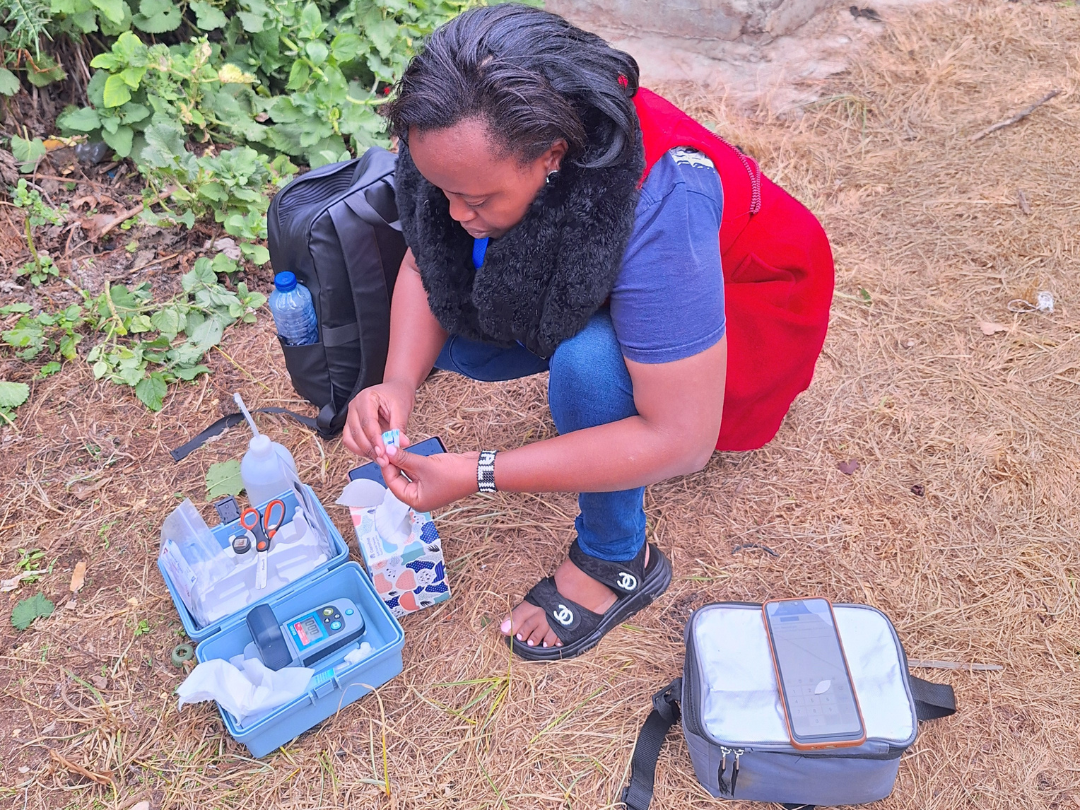
Ann Nduta, a field enumerator, measures chlorine levels from a water sample collected in Mau Summit, Nakuru, Kenya. The REAL-Water team is conducting a midline study to evaluate the performance of the Water Quality Assurance Fund program in Kenya.
Summary of Findings
Water Quality Knowledge: Water system operators knew the basics (contamination, chlorination) but lacked details on specific contaminants. Regular testing with discussions might improve their knowledge, potentially leading to better water treatment overall.
Water Treatment: Most water samples lacked sufficient chlorine for proper disinfection, leading to contamination at the household level despite sometimes being clean at the source. Improved treatment practices are needed.
Communication and Consumer Perceptions: Water providers rarely communicated water quality information with communities. Regular community engagement activities may improve community members’ awareness of water quality testing, treatment practices, and water safety levels.