October 2022
Aquaya at the 2022 Water & Health Conference
WHERE SCIENCE MEETS POLICY

Tailored rural water safety monitoring: exploring innovative models for augmenting water quality data
📍Sunflower 🗓️ Monday 24 October ⏰ 8:30 EDT
🤝 Aquaya, KNUST, REAL-Water, Oxford University, REACH, EAWAG, WHO/UNICEF
WASH development programs increasingly understand the need to tailor water safety management efforts to local conditions. A set of monitoring models are emerging for collecting and applying water quality data from dispersed water supplies in rural, low-income settings. Because water quality data availability, by itself, does not ensure water safety improvements, the second half of the session will delve into supporting (innovative) aspects of high-performing monitoring models.

Taking the poop out of water: from global to local, strengthening capacity to test and regulate household water treatment technologies
📍Dogwood 🗓️ Monday 24 October ⏰ 13:30 EDT 🤝 WHO, Aquaya, CAWST
Household water treatment continues to fill an important gap in water quality in both emergency affected areas and where water safety cannot be assured. This side event will share the latest evidence, state of the art thinking and approaches to testing and regulating household water treatment. It will also reflect on user uptake and conclude by synthesizing key recommendations on household water treatment.
Unpacking safely managed drinking water services: identifying limiting factors and filling data gaps
📍Windflower 🗓️ Monday 24 October ⏰ 13:30 EDT 🤝 WHO/UNICEF, EAWAG, Aquaya
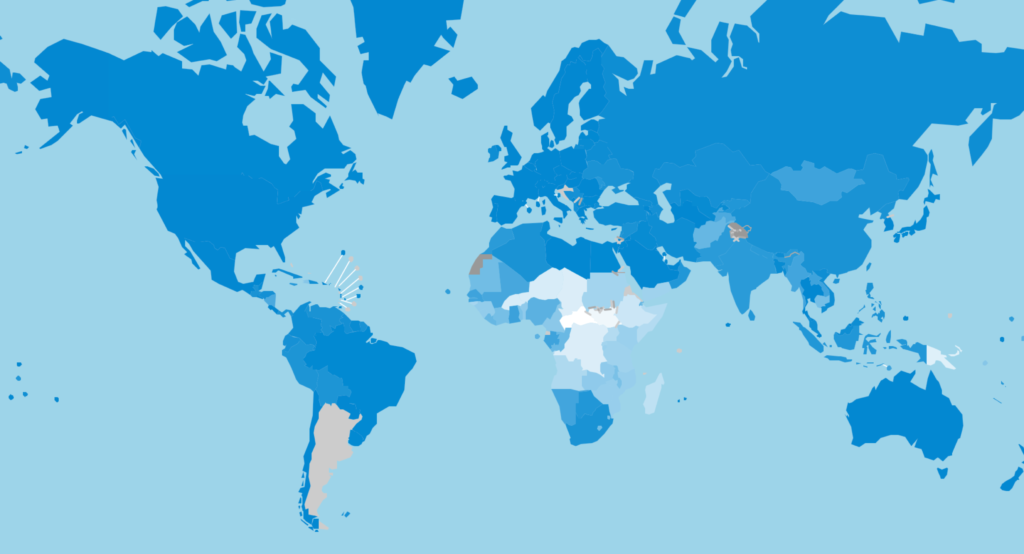
In this side session, we will explore the calculation of Sustainable Development Goal target indicator 6.1.1. which is defined as the proportion of a population with access to safely manages drinking water (SMDW). Representatives from the WHO/UNICEF Joint Monitoring Programme team will share insights from analysis of national data on how different subcomponents of SMDW (water accessibility, availability and quality) limit access to SMDW in different parts of the world. Together with researchers from Eawag, we will explore how machine learning models can help us obtain estimates of access to SMDW as well as its subcomponents for data-scarce regions and countries.
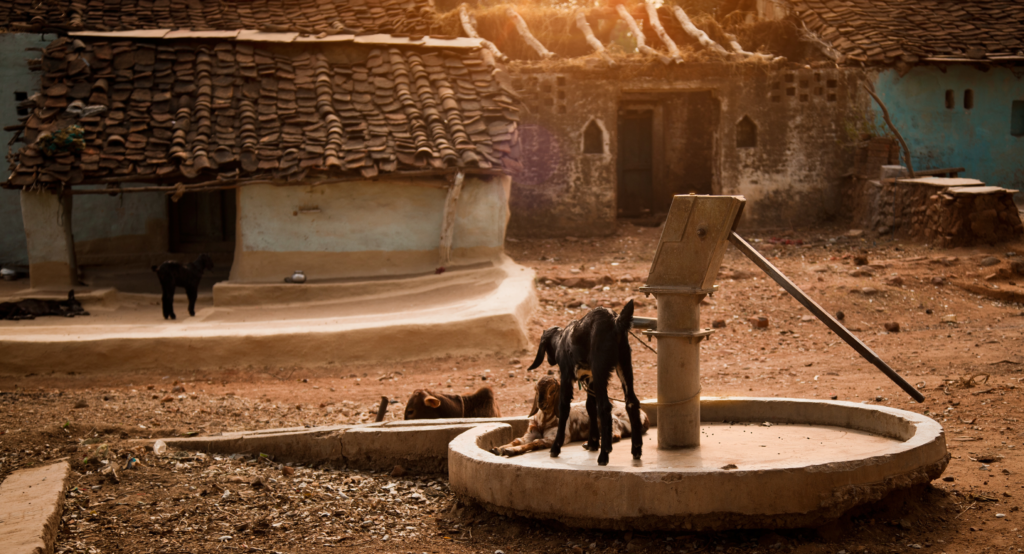
Safe drinking-water management in small systems – Implementation of WHO’s Guidelines for small drinking-water supplies
📍Redbud 🗓️ Tuesday 25 October ⏰ 8:30 EDT
🤝 WHO, UNICEF, RWSN, World Vision, Aquaya
This session will present a preview of WHO’s forthcoming Guidelines for small drinking-water supplies: risk-based regulation, management and surveillance of small water supplies and discussion of select Guidelines recommendations, including good practice examples and lessons learned.

Innovative financing approaches to close the gap between costs and willingness-to-pay for rural water services
📍Azalea 🗓️ Tuesday 25 October ⏰ 13:30 EDT
🤝 Global Communities, Aquaya, Deloitte, Safe Water Network, World Vision, Water4, USAID
This session will present evidence on the gap between the costs of rural water service provision and household willingness/ability to pay in Ghana. Then, it will discuss opportunities to apply innovative public-private sector financing (including climate financing) to bridge this gap, drawing on recent evidence from the WASH and electricity sectors.
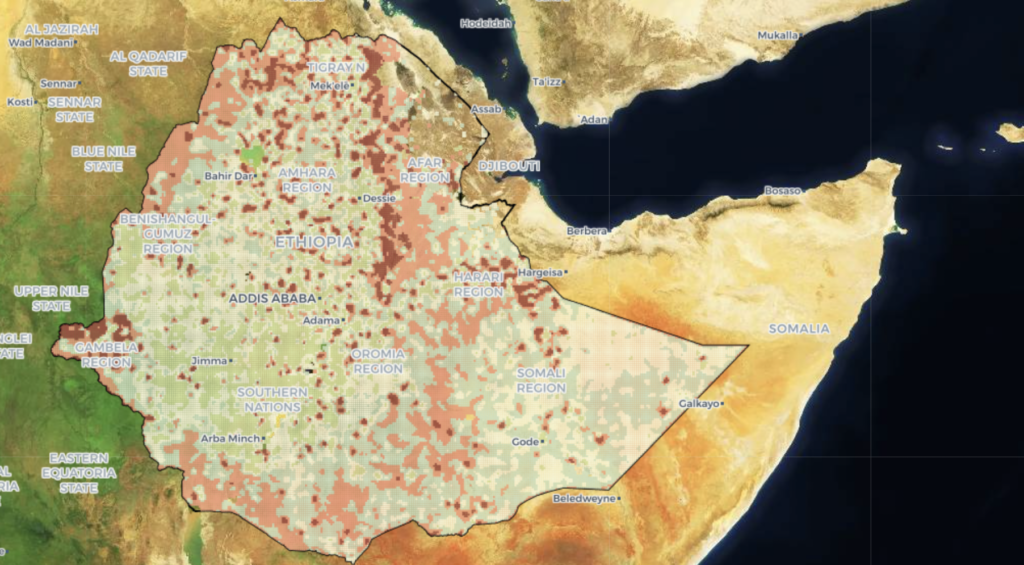
Tech Showcase: The Sanitation Planning Tool
📍Sunflower 🗓️ Wednesday 26 October ⏰ 12:00 EDT 🤝 TetraTech, Aquaya
SanPlan saves sanitation practitioners the time and challenges of collecting, analyzing, and mapping data to inform their program design by giving them access to key contextual data required for planning sanitation programs all in one place. SanPlan brings together data on settlement-level accessibility, environmental, demographic, socioeconomic, and WASH factors and displays the information spatially within a map. Users can explore trends and patterns within a geographic area, or use the built in filters and sliders to customize their analysis and download detailed, granular data on their area of interest.
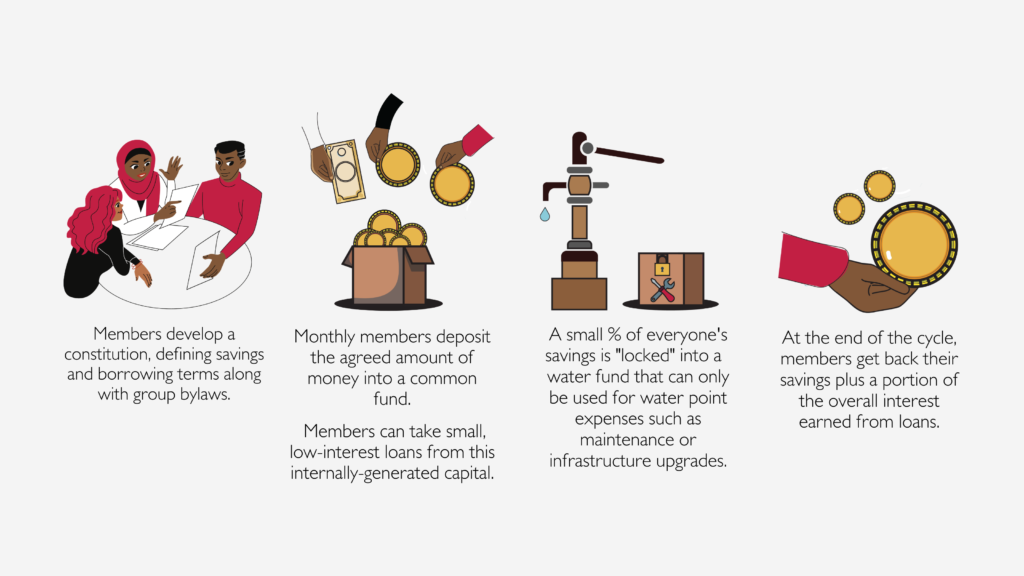
Poster: Leveraging Village Savings and Loan Associations (VSLAs) to collect water user fees in rural Uganda
📍Atrium 🗓️ Wednesday 26 October ⏰ 4:30 EDT
🤝 Aquaya, Conrad N. Hilton Foundation
With flat fees, water users pay a set amount for a given period (e.g., month or year). The collected money is then used to pay for maintenance when needed. Village Savings and Loans Associations (VLSAs) are promising structures to administer flat-fee payments. VLSAs are informal groups whose primary objective is to allow members to save money and access loans with interest. VSLAs, therefore, typically have robust accountability mechanisms that establish trust among users.
State of the World’s Drinking Water
📍Dogwood 🗓️ Thursday 27 October ⏰ 8:30 EDT
🤝 World Health Organization, World Bank, UNICEF, Aquaya
The new WHO/UNICEF/World Bank State of the World’s Drinking Water report is aimed at governments and the development partners who support them, and will include a strong call to action for accelerated progress on access to safe, accessible, and reliable drinking water. A comprehensive set of recommendations are made in the report, structured around the accelerators of the SDG 6 accelerator framework – governance, financing, capacity development, data & information, and innovation. In this session, we will discuss these recommendations.

Stop collecting dust: New Partnerships in implementation research and learning
📍Dogwood 🗓️ Thursday 27 October ⏰ 13:30 EDT
🤝 USAID, TetraTech, Aquaya, FSG, FHI360, enCompass
In this session USAID will present a new model for identifying and filling implementation research gaps in the WASH sector and how partnership is the key to uncovering its hidden value to ensuring uptake and use.
In this session, USAID will showcase how implementation research in close collaboration with partners can change longstanding approaches in the sector—such as taboos around subsidies. Grounded in the USAID Water for the World Implementation Research Agenda, the session will explore how several USAID-funded WASH research activities are leveraging collaborative partnerships to maximize the broad-based uptake of new evidence and learning. During the session, key stakeholders will share their experiences with this partnership model, evidence uptake to date, and areas of ongoing interest. Finally, participants will break out into thematic groups.

Improving financial and water safety management of rural water systems
📍Dogwood 🗓️ Friday 28 October ⏰ 8:30 EDT
🤝 Aquaya, Conrad N. Hilton Foundation, Water4, IRC, International Lifeline Fund
What options do rural water systems have to pay for operations and maintenance (O&M) and guarantee water safety? This session will draw lessons from different strategies that practitioners and researchers have experimented with in Ghana and Uganda to improve revenue collection, financial management, water quality testing, chlorination, and source protection.
There is no silver bullet to improve financial management and water safety management in rural water systems. Limited technical capacity of community-based water system managers, low socio-economic status of consumers, absence of regulatory enforcement, and poor road accessibility all make it tremendously difficult for rural water systems in sub-Saharan Africa to deliver reliable and safe water services. Identifying viable solutions requires trial and error as well as a willingness to critically evaluate what works and what doesn’t.

Implementing passive chlorination at scale: strategies for climate resilience, service delivery, and financing
📍Azalea 🗓️Friday 28 October ⏰8:30 EDT
🤝 University of Oxford, REACH, University of California Berkeley, Evidence Action, Aquaya
Achieving universal access to safe drinking water requires a large-scale increase in water treatment in underserved communities, schools, and health care facilities. Passive chlorination is an approach that improves microbial water safety at the point of water collection and provides residual chlorine protection throughout post-collection transport and storage. Recent evidence points both to the importance of safe drinking water for health and the intractable challenge of using and maintaining household water treatment technologies, especially in low-income settings.
Informed by that context, this side event will focus on passive chlorination as an alternative approach to reduce water-related health risks without relying on burdensome behavior change within households. Short presentations will provide an overview of passive chlorination technologies and implementation contexts. A synthesis of recent research and intervention experience from 16 countries will be shared. In particular, UC Berkeley researchers will outline research priorities emerging from their recent review of 27 passive chlorination evaluations. Representatives from Aquaya will speak about their work with Everflow on implementing passive chlorination as part of a handpump maintenance service in Uganda, with an emphasis on the importance of learning from failure. The Oxford REACH team will present a comparative study of the implementation trade-offs for passive chlorination and UV disinfection systems, drawing insights from collaborations with rural water service enterprises in Kenya and Bangladesh.