February 2025
How are Piped Water Suppliers Performing in Rural Ghana?
Data Collected: 2023 – 2024
Rural areas in Ghana face major challenges with piped water supply. The WHO/UNICEF Joint Monitoring Programme (JMP) states that access to piped water is limited in the country. Only 45% of households use piped water as their main drinking source. In rural areas, this number drops to just 19%. To meet the Sustainable Development Goal for water in Ghana, the supply of piped water in rural areas must grow significantly.
Performance-based funding is a potential strategy to improve service delivery and financial performance in rural water systems by linking payments to measurable outcomes. While this approach has been successfully used to incentivize private service providers in Asia and Africa, its application in public rural water systems remains limited. Benchmarking, a complementary tool, allows service providers to track their performance against standardized indicators and fosters improvements through competition and peer learning.
Methods Used to Examine the Performance of Piped Water Suppliers
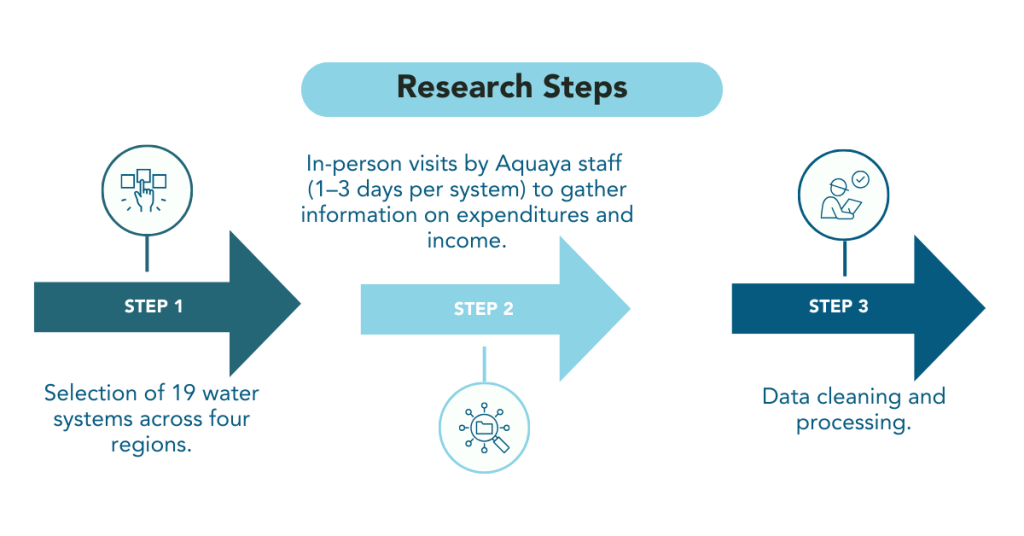
Aquaya collected information on data availability, financial performance, and service levels for 19 water systems in 2023-2024. All systems were managed by Water and Sanitation Management Teams (WSMTs) in rural Ghana. WSMTs are part of Ghana’s Community Ownership and Management model, serving as the primary management structure for rural water systems. We selected the 19 systems from four regions (Northern, Savannah, North East, and Volta) to capture diverse contexts and complement data collected under other USAID-supported studies: Rural Evidence and Learning for Water (REAL Water) and Enhancing Water, Sanitation, and Hygiene (En-WASH). We intentionally selected water systems that were more likely to have financial and service level data available, potentially biasing the selection toward better-performing systems.
Results

Data Availability
Most of the 19 water systems had very limited data available. Most data were in a hard-copy format, usually handwritten, to varying degrees of completeness and legibility; a relatively small number of digital records were available.
Financial Performance
We found substantial variation in financial performance. Revenue collection efficiency ranged from 52% to 95% for the 9/19 systems with sufficient data available. We found functional customer meters in 11/19 (58%) of the systems.
Service Levels
We observed wide differences in water accessibility and reliability between systems. Water accessibility ranged from <1 to 64 taps per 1,000 people. With respect to water reliability, systems supplied water between 7 and 30 days per month.
Insights for Future Piped Water Suppliers Interventions
Staff from most systems (12/19 systems) agreed that performance benchmarking would be beneficial and encourage motivation through competition. Potential downsides of benchmarking included;
- Creating enemies with competing systems
- Political issues (e.g., district officials interfering).
- Potential motivation to increase tariffs above customers’ ability to pay.
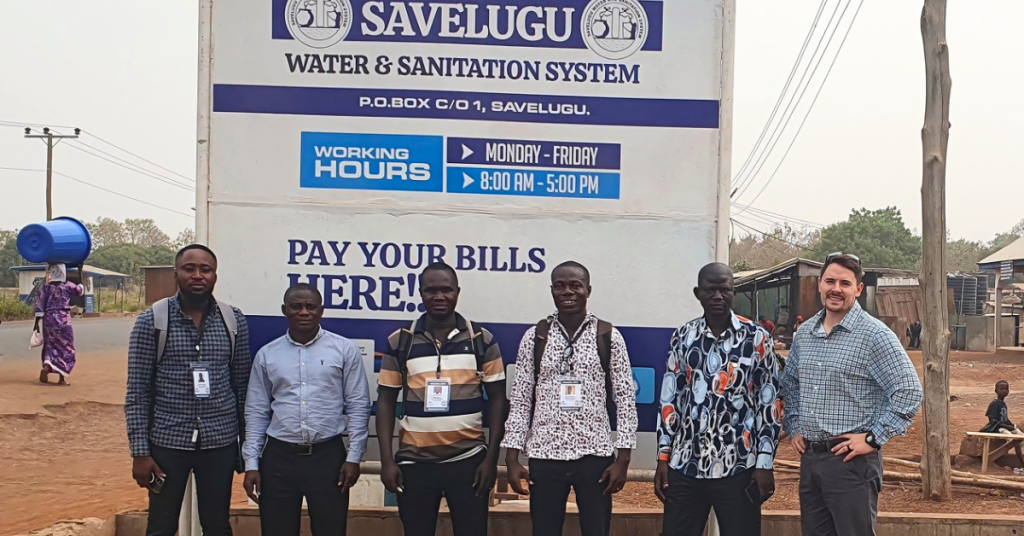
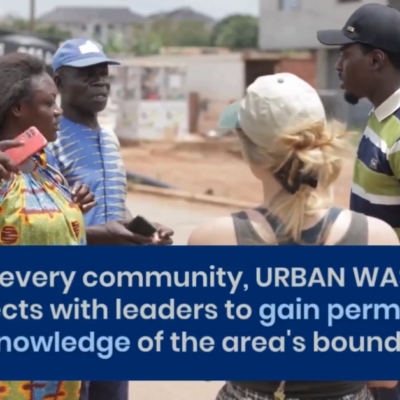
Aquaya team members at the Savelugu Water & Sanitation System during an ENWASH project field visit
Discussion and Recommendations
This research revealed substantial challenges in data availability and performance across the 19 systems with community-based management, which has important implications for implementing performance-based funding approaches. A key finding is the sparsity of data on financial performance and service delivery among the systems studied. With only 21% of systems having high data available, any benchmarking or performance-based funding mechanism must first address these fundamental data gaps and build the capacity of water system staff to document their KPIs. Simply excluding systems with poor data from performance-based funding arrangements would likely exacerbate existing inequities. The systems with the least data are often those with the fewest resources and maybe those most in need of performance-based funding to improve their operations.
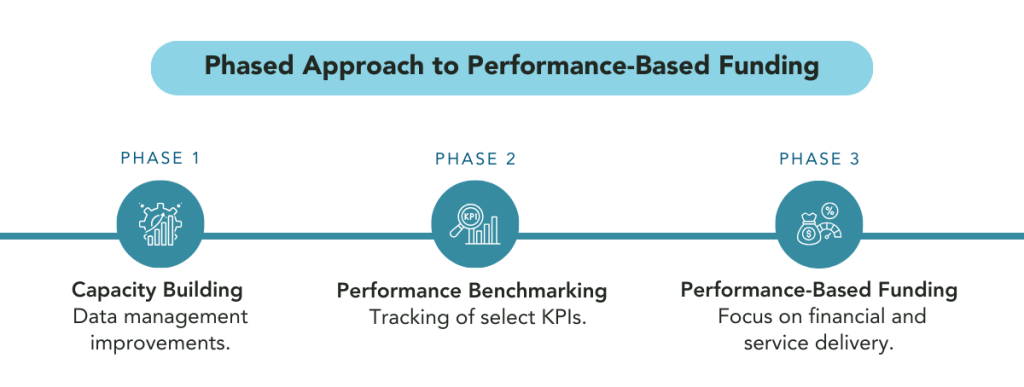
Phased Approach to Performance-Based Funding: Implementing performance-based funding in this context has the potential to drive substantial improvements in both data management and water system performance.
This work is supported by funding from the Conrad N. Hilton Foundation.